
Folders |
Paralympian Liza Corso Blazes New Trail In NCAA Cross CountryPublished by
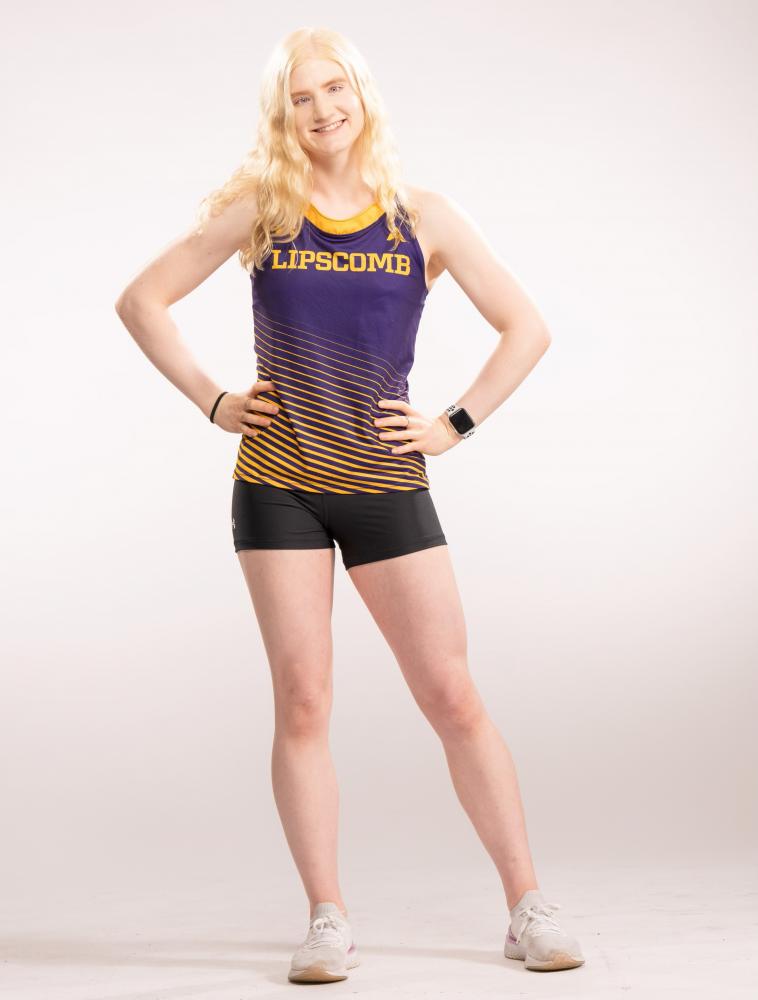
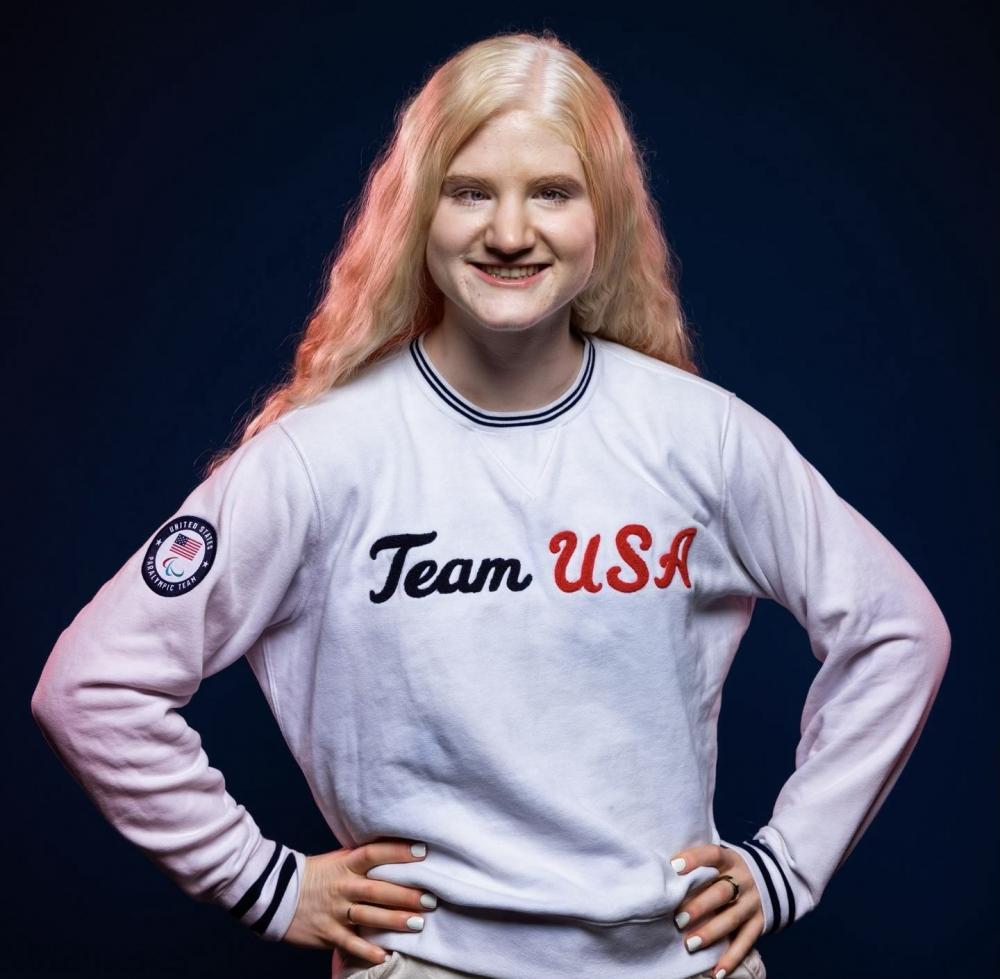
Legally Blind Lipscomb University Runner Is The First To Race At NCAA Division 1 Level With A Guide Runner, Set To Compete Friday At South Regional By Oliver Hinson of DyeStat Liza Corso’s first cross country practice at Lipscomb University could have gone smoother, to say the least. Corso, who is legally blind and has almost no depth perception, misjudged a muddy spot on her first run with her teammates and took a wrong step that resulted in a faceplant and six stitches in her chin. As she walked into the training room with blood all over her face, she saw her head coach, Nick Polk. Corso had intentionally waited until late in the recruiting process to tell Polk about her visual impairment, not wanting to be limited because of her vision. The streets of Nashville had other ideas. “That was not a good first impression,” Corso said, “especially coming in being like, ‘I want to be an athlete just like everyone else.’” Polk was rattled, too. She had recently competed in the Paralympics in Tokyo by the time she stepped onto campus for her freshman year. Her impairment was not a mystery. Polk wanted to do everything he could to accommodate her, even if she didn’t feel comfortable asking for extra help. When the freshman came limping into the training room with a bloody chin, she assured him that it was a one-time slip-up, but he knew that he would have to work hard to make sure her needs were met. “We were like, ‘Oh, no, are we gonna be able to handle this?” Polk said. Day by day, Corso and Polk made it work. Four years later, Corso is still in the spotlight. When she lines up for the NCAA South Cross Country Regional on Friday, she’ll do so with a guide runner next to her. She’s the first athlete in NCAA cross country history to do so. This time around, though, the two-time Paralympic medalist welcomes the spotlight. It’s an opportunity to be a voice for young athletes like her. “I really just didn’t want to be different” Growing up in New Hampshire, Corso hated the idea of running with a guide. “I really just didn’t want to be different,” Corso said. “Running with a guide was something that would make me different.” She may have never tried it if it weren’t for a last-minute course change before her conference championship meet in her sophomore year at Portsmouth Christian. Before most of her races, she would run the course at least once to get a better feel for its twists and turns, but that wouldn’t be an option this time around. On a “classic New England cross country course,” as Corso described it — “you’re very much in the woods, lots of rocks and roots and sharp turns and ups and downs” — she knew she would be in trouble if she didn’t have anyone to follow. Her coach enlisted the help of some local collegiate runners to act as guides, and she won that race, the Granite State Conference Championship, by over a minute. In doing so, she gained some attention from her local news station. Her story caught the eye of Pam McGonigle, a former Paralympic athlete and, at the time, the Director of Development for the U.S. Association of Blind Athletes. McGonigle told Corso all about the Paralympics and invited her to a talent ID camp at the U.S. Olympic and Paralympic Training Center in Colorado Springs. That camp turned out to be a transformative experience for Corso. At first, she was hesitant to pursue an opportunity that would make her impairment more visible, but meeting Paralympians and Paralympic hopefuls changed her outlook. “Realizing that these are people who are just like me,” Corso said, “and want to be really successful and represent their country at a high level… seeing that really opened my eyes to the possibilities.” Corso had always wanted to pursue her sport at the highest possible level, and suddenly, she had a window. In the summer of 2021, she competed in the T13 1,500 meters at the Tokyo Paralympic Games. Everything felt different in Tokyo. The Games were Corso’s first international competition, and due to the ongoing COVID-19 pandemic, she competed in front of an empty stadium. On top of that, she had switched from her high school training to Polk’s training just a few months prior. Corso went into her race with low expectations — she was projected to finish around the middle of the pack — but she came out with a silver medal and a 13-second personal best, running 4:30.67. “That was an absolute shock,” Corso said. “Obviously, I wanted to medal, but for it to actually come true, it was a pretty surreal moment.” “It’s something she’s really proud of now…” The Tokyo experience changed the way Corso felt about herself. For the first time, she was forced to be open about her impairment on a global stage, and that exposure therapy altered her perspective even further. By virtue of being under the spotlight, she realized, she could spread awareness and be a voice for other athletes with visual impairments. “I want to be that person for young people,” Corso said, “that they can look up to and be like, ‘Wow, she is confident in the way she is created.’” Still, when she arrived at Lipscomb, she wanted to be treated like any other athlete. Being proud of her identity was one thing; asking for help was another. Even her disastrous first practice served as motivation to prove that she could be “just like everyone else.” “I didn’t want people to have to accommodate me,” Corso said. “I didn’t want to be a burden.” That was one of the reasons she didn’t want to run with a guide when Polk suggested it. She had done fine without one for most of high school, and the courses she ran in New Hampshire were more technical than the ones she would be tackling in college. Once again, she may have never taken the leap if it weren’t for another encounter with global exposure: the Paris Paralympics. Similar to Tokyo, she went into the Paris Games facing some obstacles. Shortly after qualifying, she had discovered a stress fracture in her femur, preventing her from running for six weeks leading up to her race. “She spent hours and hours cross-training,” Polk said. “Even the day before the meet, she wasn’t sure if she was gonna be able to do it.” Corso made it to the start line, though. As Polk watched from home and her teammates watched at a running store in Nashville, she took off and stayed in the pack. From Polk’s recollection: “It was one of those, ‘I can’t believe I’m still here’ (races). It was like, after 400, she’s still there. After 800, still there. Twelve hundred, still there.” Corso crossed the line in third, earning her second Paralympic medal. In the midst of yelling at the television screen, Polk texted a note to the Lipscomb women’s team group chat, reminding them how significant this moment was. “I thought it was important for them to see, ‘Hey, one of your teammates hasn’t run essentially in months and just ran (the equivalent of) a 4:40 mile,” Polk said. Polk sees Corso as a constant source of motivation for her teammates — a living reminder that things will never be perfect, but you can put your best out there every day. The Paralympics have helped her embrace that role, he said. “I think she reluctantly stepped into it,” Polk said, “but it’s something I think she’s really proud of now.” An imperfect world By this fall, Corso was ready to consider running with a guide — not out of necessity, but out of a desire to take every possible step to be at her best. The difference it makes is significant. Without a guide, Corso has no idea where she is in the race, she doesn’t know when terrain is changing, and she has to use the people in front of her to know when a turn or hill is coming. Previously, Corso used her coaches for this. Two years ago, at the NCAA South Regional in Gainesville, Florida, Corso had Polk and his staff stand at various points in the last kilometer, which was fraught with twists, turns and bumps. Corso finished 138th at the 2023 NCAA Cross Country Championships, helping her team finish 11th in its first appearance at nationals. She redshirted the 2024 season.
The NCAA’s approval for Corso’s guide was historic and monumental, but the rollout hasn’t been seamless. The Atlantic Sun Cross Country Championship on Oct. 31 was supposed to be a breakout race for her. She won her first conference title on the track last spring, and Polk believed she was in prime position to get her first win on the grass. One of Corso’s male teammates, Trey Harlson, served as her guide. In order to avoid interfering with the race, he was told to start in the back and wait until the race became less congested to move up alongside her. Unfortunately, the course went over a bridge about 600 meters in. Harlson had no chance to get up to her in time, and Corso had no one to tell her about the divot she was about to step into. Like she did four years ago in the streets of Nashville, Corso faceplanted. Once again, her impairment was on full display. With four more years of maturity on her side, though, Corso handled this moment differently. She got up, dusted herself off and kept going. She finished eighth, helping her team come away with a dominant 29-point victory. “She handled it pretty well, to say the least,” Harlson said. “I was very impressed.” Harlson, a senior, has known Corso for three and a half years. Her performance at the conference meet was a testament to the growth he’s seen in that time. “I think for the longest time, she felt like she had to prove it to herself and others that despite being visually impaired, she can do everything just like everyone else,” Harlson said. “But I think she’s realized that reaching out for help is not weakness at all.” Harlson will once again guide Corso on Friday at the NCAA South Regional. Corso will likely be up front, trying to lead her team back to the NCAA Championships for the third year in a row. And everyone watching will see the two of them side-by-side. And Corso is proud of that. “It’s not a weakness,” Corso says. “It’s something that will help me be able to race just like everyone else and close the gap.”
History for Lipscomb University Track and Field and Cross Country - Nashville, Tennessee
Show 10 more
|


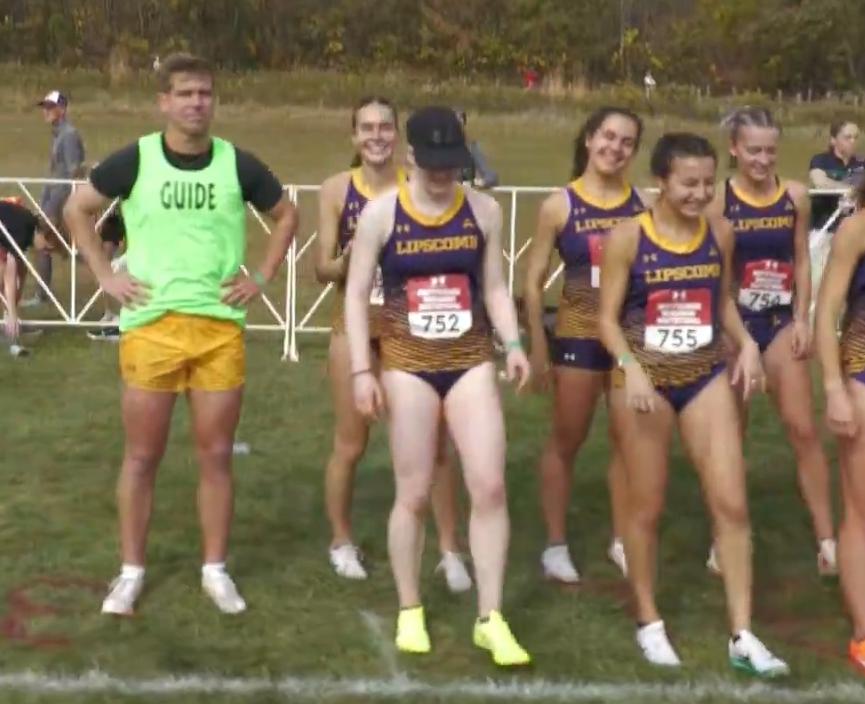
 Now, with a guide, she has instant feedback for every variable — that is, in theory.