
Folders |
Book Review - The Track In The ForestPublished by
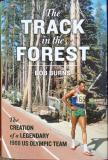
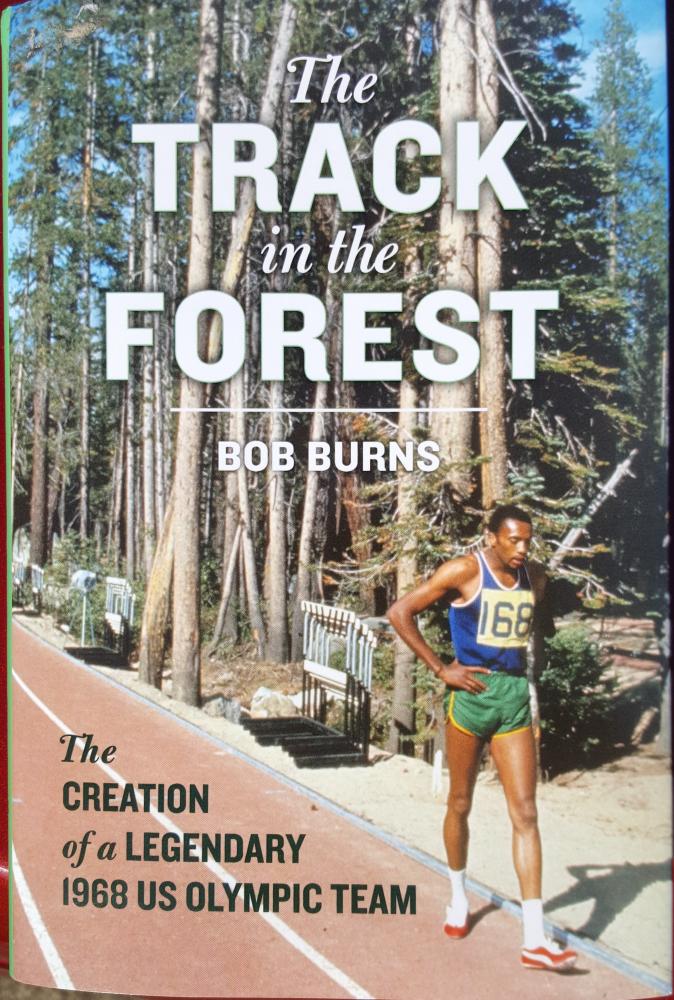
What Happened At Echo Summit Still Resonates By Doug Binder, DyeStat Editor At a bend in the road along Highway 50 in the Sierra Mountains south of Lake Tahoe, there is a parking lot. In the summer time, nearly all the cars parked in the lot are associated someone hiking on the Pacific Crest Trail. In the winter time, the lot fills up for sledding and tubing at Adventure Mountain. There is something else in this remote spot that few people pay attention to any more. In 1968, the nation’s greatest male track athletes gathered here for a camp and an Olympic Trials like no other. If you walk in that parking lot today, you can follow the curve of cracked pavement and make out the backstretch of the track. So says Bob Burns, the author of the new book “The Track In The Forest” (Chicago Review Press), which details the event that took place here in the late summer before the Mexico City Olympic Games. Burns attended the off-day at the 1968 Olympic Trials at Echo Summit with his family as an 11-year old. His memories of the event are vague. But he grew up to become a sportswriter, and he worked in South Lake Tahoe, and later was one of the leading voices to have the site of the Trials commemorated with an historical marker. It was the dedication of that marker, in 2014, where Burns began to think about writing a book about what took place there in 1968. And what Burns accomplished with the book was preserve the legacy of a place and time that should not be forgotten by anyone who loves track and field. “Meeting with some of the guys (in 2014) and hearing them talk about the mark that Echo Summit left on them, it got me interested (in a book),” Burns said. “I started calling anybody I could get a hold of.” Over the course of 50-plus interviews with athletes who participated in the training camp at Olympic Trials in 1968, Burns gathered enough information to write what will surely become a go-to reference on the history of Echo Summit. “Some of them were rapturous in their descriptions of it, from Dick Fosbury to Tommie Smith to Tracy Smith,” Burns said. “It was a lot of work, but it was a lot of fun.” Why was the 1968 team so good and why was it so important? From 50 years on, it is easy to connect the dots with the 1968 team and the birth of what might be considered today to be modern track and field. In fact, it may have represented a zenith in the popularity of the sport in the United States. Performance-enhancing drugs were beginning to tilt the playing field. (Steroids were still legal). Shoe companies were paying top athletes under the table as the sport began to drift away from the old-fashioned ideals of amateurism. (adidas and Puma were the major players). The first American studies on altitude training began at Echo Summit, with Jack Daniels’ ground-breaking experiments conducted on the distance runners in the camp. Sport as a vehicle for political activism and social protest? The raised gloved fists of Tommie Smith and John Carlos on the awards stand in Mexico City on Oct. 16, 1968 sent shockwaves around the world and planted a message more firmly than any sporting event ever had. The 1968 U.S. men’s Olympic team broke six world records in Mexico City. Some attributed that to the altitude, but there was more to it than that. The athletes who trained, bonded and competed in Echo Summit were the athletic cream of the crop of the Baby Boom Generation just as they were reaching their prime. This was a generation that was bound and determined to do things differently and brilliantly – illustrated by Fosbury’s revolutionary high jump technique. “This was an era of giants in the sport. Some of the names still resonate today,” Burns said. Bob Beamon. Tommie Smith. Jim Hines. Al Oerter. Jim Ryun. Dick Fosbury. Lee Evans. Randy Matson. Bob Seagren. Bill Toomey. Willie Davenport. The list of Hall of Famers goes on. But what happened at Echo Summit, and in the creation of this team, is something that can never be duplicated. Some who ran that summer were trying to avoid going to the Vietnam War. All who came to Echo Summit (the top 10 in each event were invited to the camp) stayed in trailers across the highway from the track. Per diem was $5 per day. They were supervised by U.S. Olympic track coach Payton Jordan and Echo Summit organizer Bill Bowerman. And there was high drama at the Trials. (An earlier meet, also called the Olympic Trials, was held in Los Angeles. The results became meaningless. The money raised at the gate paid for the costs at Echo Summit.) The track at Echo Summit, with its 7,377 elevation, became the real proving ground. U.S. officials wanted to send a team to Mexico City that was battled-tested for the effects of altitude. Burns’ book details all that went according to plan, and the suffering of a couple of individuals who got left out. Dave Patrick of Villanova won the 1,500 meters in Los Angeles but was left off the team after placing fourth at Echo Summit. (All three runners ahead of him advanced to the Olympic final). One of the greatest high jump competitions ever held came on the final day of the Olympic Trials at Echo Summit. John Hartfield was in the driver’s seat, almost assured of making the Mexico City team. Five minutes later he was fourth, and out, thanks to spectacular, clutch personal-best jumps by three other jumpers. The result saw Hartfield run off into the grove of pines growing on the infield, in tears. It was a meet like no other and held in a location like no other. Echo Summit is a natural divide, separating the valleys of California from the high-desert terrain of Nevada. Echo Summit, in 1968, also served to divide U.S. track and field – on one side a new frontier; on the opposite, all that came before. For the rest of the country, 1968 was sort of like that anyway. “It was the tipping point,” Burns said. With meticulous research and hours of interviews with the athletes who were there, The Track In The Forest tells that story. |