
Folders |
Remembering 1968 And The Mexico City Olympic GamesPublished by
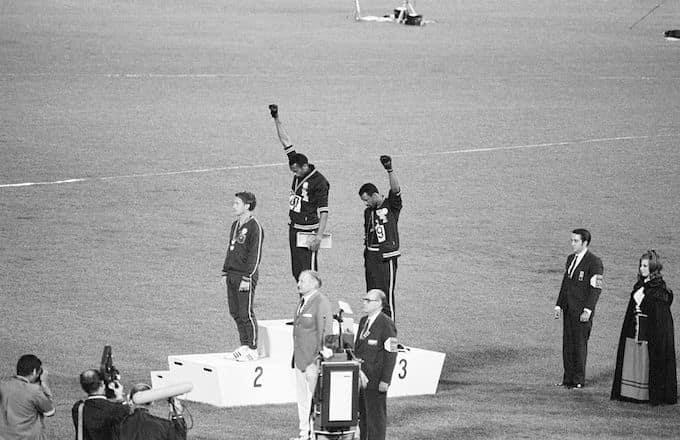
Fifty Years Later, 1968 Games Still Pack Influence By Doug Binder, DyeStat Editor I can’t let the month of October pass without a bit more reflection on what happened 50 years ago in Mexico City. It was possibly the greatest U.S. Olympic track and field team – ever. It was, after all, comprised of the best athletes from the post-War II Baby Boom Generation just as they were coming of age. They were part of a resistance, rebelling in ways large and small against archaic ways of thinking, war in Vietnam, and racism. Fairness was important, but it was not always achieved. Female athletes did not receive the same treatment as male counterparts. The process for selecting the men’s 1,500 meters team was poorly handled. (More on that in a minute). The team that represented the U.S. at Mexico City may have been selected by the USOC, but it was shaped by an era of upheaval and unrest. The most enduring image from 1968 is an image of protest. Tommie Smith and John Carlos, the gold and bronze medalists in the 200 meters, were sensational sprinters. But they will be forever remembered for raising their black-gloved fists and bowing their heads on the award podium. There is symmetry in the image. Two fists. Two assassinations. Martin Luther King, Jr and Robert F. Kennedy had both been shot and killed within the past seven months. But the fists – called a “Black Power Salute” – also held balled up anger that anyone watching the live broadcast could identify with, even if they weren’t happy about it. Students were protesting governments around the world. One such protest, in Mexico City just days before the Opening Ceremony, resulted in the massacre of more than 200 people. The fight for social change and justice in the U.S. was the defining movement of the 1960s. “It means everything,” said coach Lisa Morgan, of Bloomfield College in New Jersey, of the Smith-Carlos protest. “It teaches so much and ties into the fact that there are still injustices going on today. (The protest) symbolizes everything they went through in order to get on that podium and represent our country, a country where we were not treated justly.”
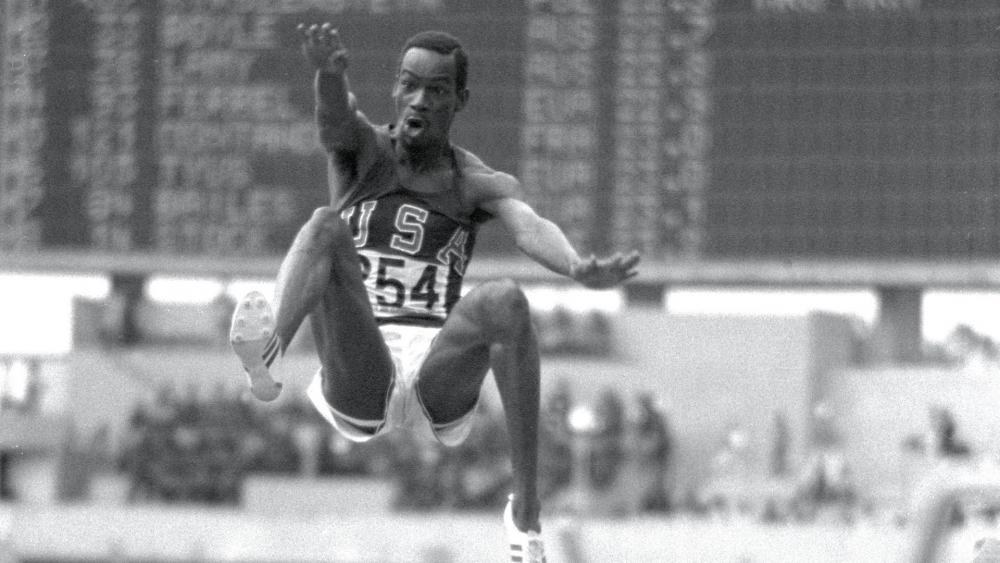
In the team hotel, Carlos and 1968 teammate Bob Beamon spoke to an all-star group of teen stars that included Sydney McLaughlin, Candace Hill and Samantha Watson. “It’s funny how sometimes you don’t know your own history,” Morgan said. “That’s what John (Carlos) talked about, knowing who came before you, knowing who Wilma Rudolf and Wyomia Tyus were.” Coach Brandon Jiles, of the Motor City Track Club in Michigan, was in Cali as well and became acquainted with a man, he said, who is “cemented in history.” “When you stand up for something and it’s the right stance that you take, it’s a timeless thing,” Jiles said. “Some misconstrue the protest with hatred of anti-whiteness, but it’s about equality for everybody, men, women, black and white. I’m very grateful for that moment and we’re seeing today that it’s still relevant.” The protest by Smith and Carlos, and the solidarity displayed by Australian silver medalist Peter Norman, is probably the most memorable thing about the Mexico City Games. And 50 years of contemplation of turned two men were vilified into heroes. But there was also so much else going on in Mexico City that resonates today. In some ways, modern track and field was born. Distance runners were introduced to the science of altitude. Shoe company representatives were paying top athletes under the table, undercutting dusty old ideas of amateurism. State-sponsored doping was ramping up in East Germany and PEDs were un-leveling the playing field. Kenya became a player in the distance races, as Kip Keino beat Jim Ryun in the 1,500-meter final. Jamaica was emerging in the sprints. And the U.S. team, forged by a rigorous college system and a six-week training camp (for the men) at Echo Summit, Calif., was sensational. The word Beamonesque joined the lexicon after Beamon shattered the world record in the long jump by 22 inches. Dick Fosbury introduced the Fosbury Flop to the world and won the high jump with an Olympic record that left thousands of coaches worldwide scratching their heads. On the first all-weather track in Olympic history, Jim Hines broke the 10-second barrier in the 100 meters. In fact, Hines (9.95), Smith (19.83 in the 200) and Lee Evans (43.86 in the 400) all broke world records. The great Al Oerter extended his dominance in the discus with his fourth gold medal. Bob Seagren, who broke the world record in the pole vault at Echo Summit, won gold. The top five finishers in the men’s triple jump all broke the world record, including Art Walker, the top American, in fourth. The U.S. smashed world records in all three relays events (the women’s 4x400 wasn’t on the program yet). Wyomia Tyus broke the world record in the 100 (11.08) and also anchored the 4x100 victory. The truth is things weren’t equal yet. There were 24 events for men, just 12 for women. There were practically no high school track teams in the U.S. for girls and wouldn’t be for another six or seven years in most states. More than anything, the 1968 Games fit the times in which they were held. And it was a rapidly changing world. A Timeline of 1968 January 14 – Green Bay defeats Oakland in Super Bowl II. January 21 – The Battle of Khe Sanh and the Tet Offensive begin the costliest and deadliest stretch of the Vietnam War. February 16 – The Olympic Project for Human Rights, a movement that started in the fall of the 1967 by San Jose State professor and activist Harry Edwards, makes one of its biggest stands in New York at the NYAC International Games at the new Madison Square Garden. Black athletes lead a boycott of the high-profile indoor meet due to the New York Athletic Club’s history of discrimination against African-Americans and Jews. Throughout the winter, and into the summer, the issue of whether the top black athletes would boycott the Olympic Games in Mexico City was front and center in track and field. “I’m not willing to sacrifice the basic dignity of my people to participate in the Games. I am quite willing not only to give up participating in the Games but my life as well if necessary to open a door by which the oppression and injustice suffered by black people in the U.S might be alleviated.” – Tommie Smith to Track and Field News February 19 – Mister Rogers’ Neighborhood debuts. March 19-23 – A five-day sit-in at Howard University in Washington, D.C. by students shuts down the school over its ROTC program and the Vietnam War. March 31 – President Lyndon Johnson announces he will not seek re-election.
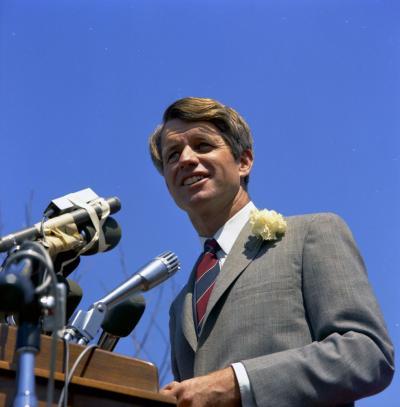
April 23-30 – Student protesters at Columbia University take over the administration and shut down the campus. May 13 – Upheaval in France leads to a million people marching in Paris amid general strikes and demonstrations that threaten to shut down the nation’s economy. June 5 – Presidential candidate Robert F. Kennedy is shot and killed at the Ambassador Hotel in Los Angeles after winning the California Democratic primary. June 13-15 – In Berkeley, Calif., USC wins its 25th NCAA men’s track and field championship by one point over Washington State, 58-57. June 20 – The “Night of Speed” takes place at Hughes Stadium in Sacramento. In the days before fully automatic timing, hand times were recorded by three separate officials. To that point, nobody had ever run under 10.0 seconds. But in one night, across two semifinals of the 100 meters at the U.S. Outdoor Championships, Jim Hines, Ronnie Ray Smith and Charlie Greene all were credited with wind-legal 9.9 world records. The final proved a bit anticlimactic, with Greene taking it in a wind-aided 10.0. June 26 – Unrest in Brazil leads to a protest march of 100,000 in Rio de Janeiro. June 29-30 – In a meet billed as the 1968 Olympic Trials, top male athletes from across the country come to compete over two days in Los Angeles. But the process of exactly how a team would be selected with a two-tiered Trials in Los Angeles, and at altitude later at Echo Summit, is vague. Winners in Los Angeles assume that they have made the team, including 1,500-meter champion Dave Patrick of Villanova. However, after the L.A. meet is over, U.S. team officials decide that the only results that will count will happen in Echo Summit. The L.A. meet, essentially, brought in a gate that was used to fund the training camp and final trials near Lake Tahoe. Of all who won in L.A., only Patrick (fourth at Echo Summit) will not make the Olympic team. As the Olympics grew closer, the threatened boycott by black athletes lost its steam. Many reasoned that they had worked too hard to let the opportunity pass. One of the OPHR's demands was met when the IOC reinstated its ban of apartheid South Africa. August 5-8 – The Republican National Convention in Miami Beach nominates Richard Nixon for President. August 20-21 – Soviet bloc troops and tanks roll into Czechoslovakia to quell ‘Prague Spring.’ August 22-30 – Police clash with protesters in Chicago at the Democratic Convention in Chicago. Vice President Hubert Humphrey, an unpopular choice for the anti-war movement, is nominated for President. August 24 – A low-key, one-day U.S. Olympic Trials for women takes place at Mt. San Antonio College in Walnut, Calif. August 26 – The Beatles release the single “Hey Jude.”
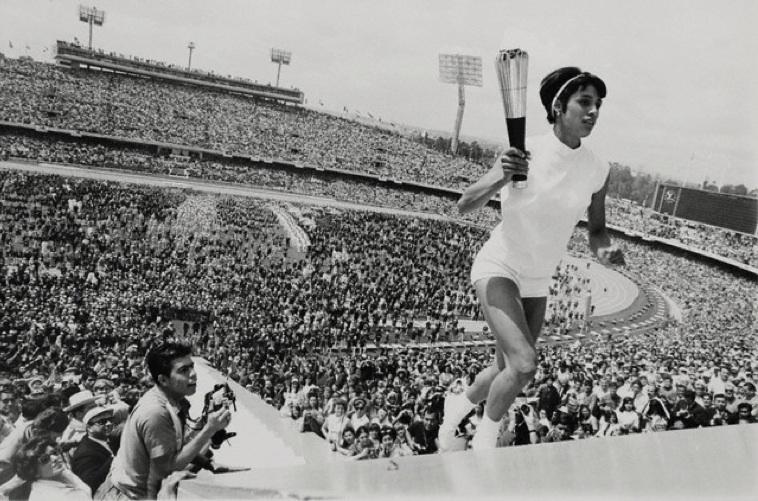
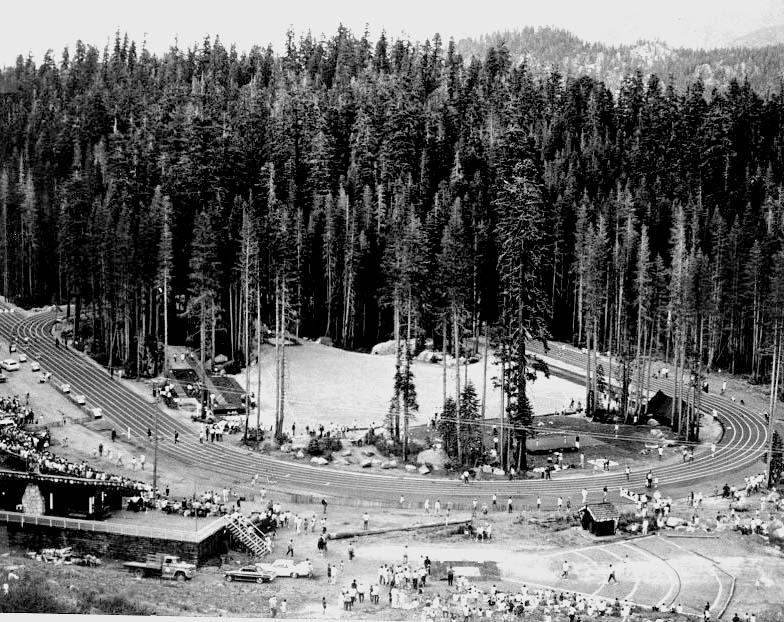
September 6-16 – Following a six-week training camp for the top 10 men in every event, held at an elevation of 7,377 feet – 27 feet higher than Mexico City’s track – the Trials were held in front of about 2,000 spectators on a track carved into the forest. Oregon coach Bill Bowerman organizes the Echo Summit location and camp. Stanford coach Payton Jordan serves as the U.S. men's coach. The seclusion of the camp bonds the men trying to make the team together and the competition schedule mimics that of Mexico City. With each competition, the top three athletes are processed for the team and a travel agent works quickly to send everyone else home. “I didn’t know places like that existed in the United States,” said 400-meter sprinter Larry James of Echo Summit. “To this day, I can taste the air. In the morning it was like a fresh glass of spring water.” September 24 – CBS debuts the show “60 Minutes.” October 2 – Tlatelolco Massacre. Student protests in Mexico City just before the opening of the Olympics are met with a confusing barrage of gun fire by government forces. More than 200 people are killed and the Mexican government uses the next 10 days to scrub the square and paint over the blood stains. October 10 – The Detroit Tigers rally from a 3-1 series deficit to win Game 7 against the St. Louis Cardinals and clinch the World Series. October 11 – NASA launches the manned Apollo 7 mission. October 12 – Opening Ceremonies of the XIX Olympic Games in Mexico City. Longtime track historian Walt Murphy was there. He was 24 and it was his second Olympic Games. In those days he went with the tour that was led by Track and Field News. “I remember the off the track stuff, rooming with my brother and two other guys,” Murphy said. “You could mingle with the athletes in the cafeteria. That’s how open it was. There had been student demonstrations. I remember taking pictures of campus buildings with bullet holes that had been painted over.”
October 16 – Tommie Smith and John Carlos raise their gloved fists during the playing of the national anthem on the awards stand after the 200-meter final. The demonstration has roots in the Olympic Project For Human Rights, a movement which began in 1967. Australian silver medalist Peter Norman wears an OPHR badge on the award stand in solidarity with the Americans. Backlash from the moment causes the USOC to send Smith and Carlos home from Mexico City and will follow them for decades. Smith, incidentally, became the first man to legally record a time under the 20-second barrier in the 200 meters, going 19.83. He would hold the world record for 11 years. October 18 – Bob Beamon breaks the world record in the long jump by 22 inches, with a leap of 29-2.25. The jump is so far that the device used to measure the marks in the sand pit isn’t equipped to measure it. A steel tape measurement causes a 15-minute delay before displaying the official measurement: 8.90 meters. “I remember sitting in the stands watching as the metric measurement comes up,” Murphy said. “They had a fancy measuring device that wouldn’t go far enough to record the mark, so the pulled out an old tape. We all had our conversion tables and when we looked up 8.90, nobody wanted to say it out loud. It was shocking.” Beamon, overcome with emotion, collapses to his knees. By the time the delay for measurement ends, it begins to rain. No one else comes close and Beamon's world record will last 29 years.
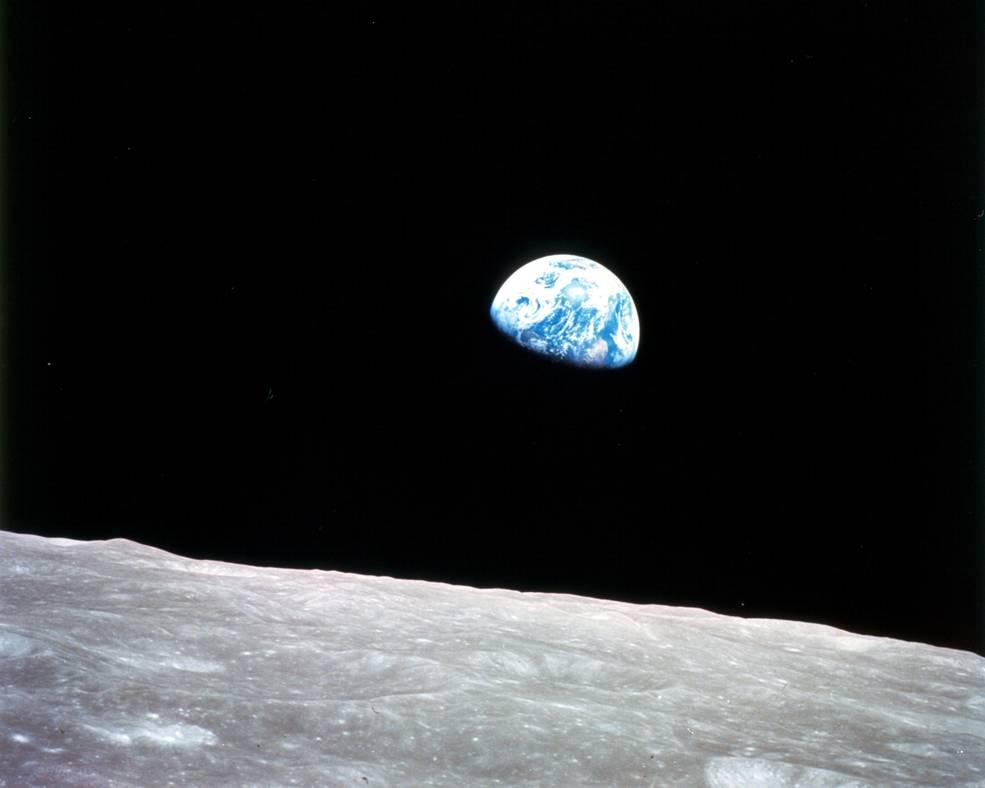
October 20 – As the marathon finishers enter the stadium in Mexico City, Dick Fosbury’s backward style in the high jump captivates the crowd and his 7-4.25 winning jump breaks the Olympic record. October 25 – Led Zeppelin make their first live appearance in England. November 2 - Steve Prefontaine of Marshfield High wins his second straight Oregon high school state championship in cross country. November 5 – Nixon is elected President of the United States. December 24 – The Apollo 8 mission sends astronauts to the far side of the moon and they become the first humans to view the entire planet Earth.
More news |




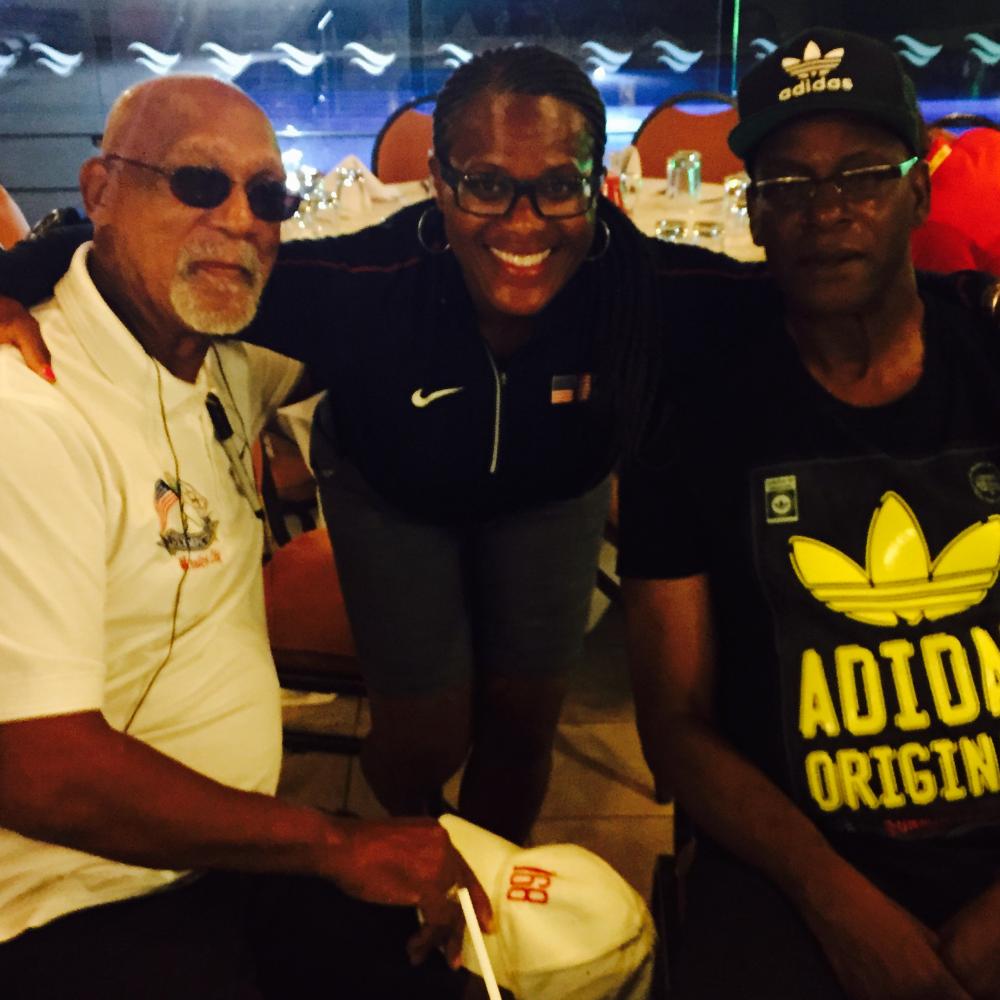

 Morgan led a group of young U.S. athletes to the IAAF World Youth Championships in Cali, Colombia in the summer of 2015.
  April 4 – Civil rights leader Martin Luther King Jr. is shot and killed by a sniper in Memphis, Tenn. News of the killing touches off riots in dozens of major cities across the U.S. that last for days.