

Folders |
Marc Bloom Recounts How Music and Athletics Became Vistas to See Beyond Color LinesPublished by
My Early Racial Reckoning:Spurning Privilege, Seeking WholenessBy Marc Bloom Growing up, I might have become a racist. In my white neighborhood in Brooklyn, people of color were denigrated with a corrosive language that continues finding its adherents to this day. Look at the evidence in the recent hate crimes trial of the murderers of Ahmaud Arbery. Affronted by this early assault on my young idealism, I wondered, what would be my means of escape? I was no rebel, but the prevailing attitudes seemed to me scabrous, and eternal. Black musical artists and young black track and field athletes would eventually come to my rescue. My community, working-class Sheepshead Bay, predominantly Jewish and Italian, was not a bad place in which to grow up. With its sublime charms, the nearby beaches, Coney Island down the road and all the playground sports we could devour, the Bay offered a fresh start for families like mine emerging out of the doldrums of World War II. Whenever the war came up, my mother would tearfully tell of her dearest friend whose family in Europe was “wiped out.” To me, there had to be something more to life than mourning, some way to get beyond ethnic limitations. The author Philip Roth would soon make this his life’s work. Within my insular tableau, I, too, sought to find my independent voice. Mine began with winning sprints against my buddies. Running, as nothing else, felt free. I would hold onto that feeling, embracing it when I needed it most. In the robust economy, new housing was available and in 1958 we moved into a two-family house a block from where Sheepshead Bay High School was being built. Coming from a dingy apartment in Borough Park, we considered it the suburbs. My parents paid $28,500 for our three-bedroom walk-up. The downstairs tenant paid us $125 a month in rent. I’m sure the rent came in handy. My father, who served in the Marines during the War and had seen heavy combat in the Pacific — earning many commendations for heroism — had a job delivering bottled soft drinks from a truck to grocers in Brooklyn’s rougher neighborhoods. My friends and I watched the construction workers create the high school brick by brick. Unfortunately, there was no running track in the plans. In the winters, the would-be track team would do zig-zagging loops in the close, stuffy school basement. First you ran; then you gave up your lunch. Welcome to New York.
A few doors down, Lou’s homey superette catered to the new families in the neighborhood needing a bottle of milk or loaf of bread. Lou worked the cash register munching a fried egg sandwich on a toasted bagel. He allowed customers to pay later. You owed a dollar fifty-two? Lou wrote the amount on a slab of soiled cardboard with your name. My mother didn’t work at the time. Few mothers did, as far as I could tell. After a day of schlepping heavy soda cases in Williamsburg and Crown Heights, my father would lie down and my mother would rub Ben Gay into his back and shoulders. I remember the unmistakable odor of Ben Gay with as much clarity as that of the heaping plates of brisket. The new homes were fashioned like a rectangular urban development, from Avenue X to Avenue Y, on Bragg Street and Brigham Street. The two streets shared a common driveway with parking areas for two cars in each backyard, a spot for the homeowner and tenant. We had a tiny backyard patio with room for one chair and a barbeque. While the driveway was narrow, we used childhood ingenuity to create enough space for stick ball and football games, as well as our sprint duels. There were at least 100 homes in our rectangular quadrant. Every family was white. The few black families in the neighborhood lived mainly in the housing projects across the street from the high school. While civil rights protests and lunch counter sit-ins were heating up down South, none of that was accorded much importance in neighbors’ talk. What I did hear were whispers of a hard community rule: never sell or rent to blacks. Black people were referred to mainly as “the coloreds” on our streets. I never heard a kind word about them. In junior high, black children would usually wind up in the “slowest” classes, often with special needs children, who were then called, even by teachers, “retarded.” Other white neighborhoods and schools in south Brooklyn were no different. Red-lining to keep “colored undesirables” out of white sections took care of that. Even basketball was all white when we played on the junior high courts. Once Sheepshead opened, in 1959, my friends and I started trying to imitate the moves of our local hero, Rico Petrocelli, a 6-foot guard whose acrobatic alley-oops brought to mind the NBA’s Elgin Baylor. Rico was named first-team all-City by the New York Post. Considering the reputation of New York City basketball, that honor was high school sport’s Nobel Prize. For home games, we had our own “Friday Night Lights” with a packed gym and screams every time Rico touched the ball, especially when a “black team” like Thomas Jefferson would come from East New York to play our white boys. Rico was even better at baseball than basketball. For his hitting and pitching, Rico was Player of the Year in New York, and in 1961 signed a major league contract with the Boston Red Sox, becoming an all-star shortstop. The local bowling establishment, Rainbow Lanes, was our hangout. We shot games at all hours till our thumbs bled. The café radio played Elvis, who picked up his rock-a-billy licks from Muddy Waters and other black performers on the “Chitlin’ Circuit.” My family never went anywhere except to nearby Brighton Beach Baths, an oasis where my parents rented a cabana for the summer. It was our Riviera. I swam, played paddleball (today’s pickle ball), and got my first tantalizing glimpses of girls in bathing suits showing signs of womanhood. Borscht Belt comics did their shtick on stage. There was no Richard Pryor, sorry. Entering my teens, I didn’t know any black people personally and had no resource to turn to as I became bitter and confused at what I constantly heard blowing in the wind: that “the coloreds” were inferior, a threat, belonged with their own kind and deserved their plight. Though an unworldly youngster who knew little about social issues, I felt despair by such prejudice. Maybe it had something to do with always hearing, a little more than a decade after the ruins of the Holocaust, that we Jews were better than others. Believe me, I never felt “chosen.” But maybe I was chosen for something. By then, “race music” was making its way to young white audiences and I wanted to witness it for myself. At 12, in my first exposure to black people in any meaningful way, I thrilled to Alan Freed’s rock ‘n’ roll show at the Brooklyn Paramount theatre in 1959. The performers included pivotal black musical figures like Jackie Wilson, Lloyd Price and Bo Diddley. There were black and Latino kids in the audience. The experience put me up close to a dynamic and rip-roaring joie de vivre, taking me out of my closeted home on a trajectory, in my young estimation, to an exciting and more authentic world.
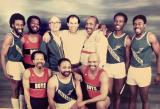
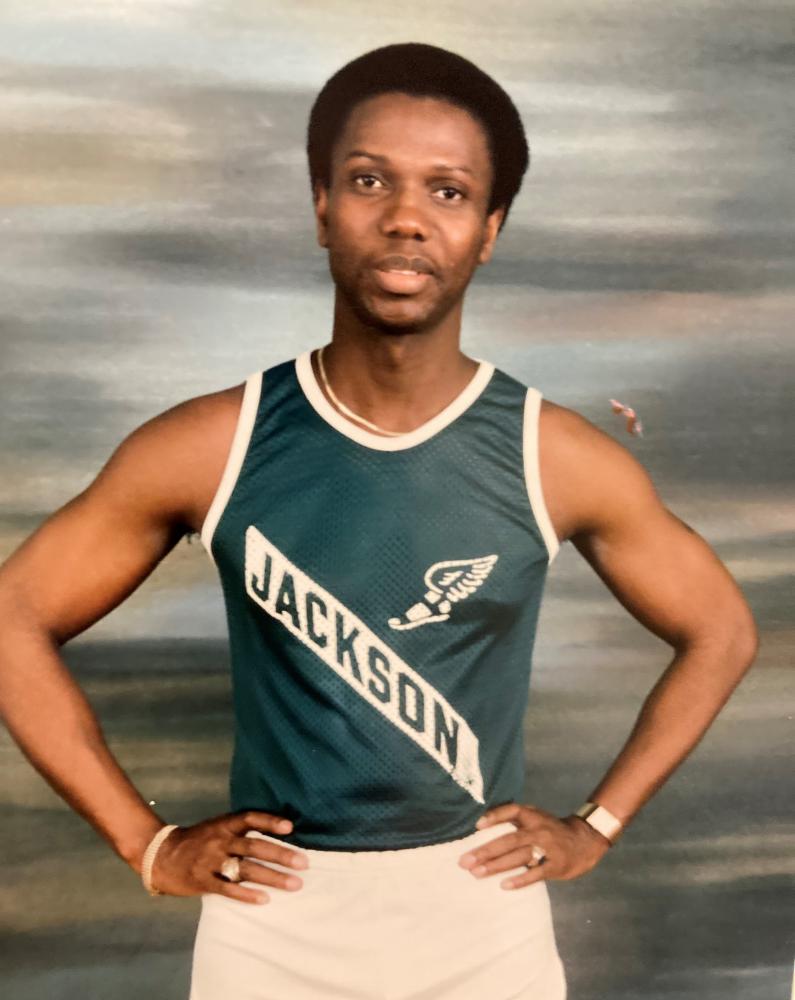
I was captivated by this spirit of distinctive blackness that was provocative in its bluesy messages of love, sexuality and longing. By this time I had starting helping my father on his soda route on school vacations. In the early morning light, we picked up his rickety truck, and goods, at the soda plant in rough-edged Bushwick, greeted by nearby brewing companies and another pungent aroma: earthy hops. On my father’s stops in black neighborhoods like Bed-Stuy, my young eyes saw poverty and ennui on street corners, stoops full of kids with nothing to do in the summer, entire neighborhoods that seemed as alien to my existence as African natives pictured in Life magazine. In my mind, I connected the two: the raucous lyrics of the music legends crying to be heard and the crying needs of despondent kids effectively enslaved by an uncaring and demonizing society. When I entered the high school and joined the track team, competing in events with black athletes from Bed-Stuy and Cambria Heights, Bushwick and the Bronx, I was further engaged in a magical culture brimming with hard-won sweetness and competitive fury; it offered fragile promise to those with the courage, and speed, to overcome. These youngsters may have done without, but when they ran they were aristocrats. I met black youth from Boys High, Andrew Jackson, DeWitt Clinton and Evander Childs, made friends, and would soon enter a circle of black athletes traveling together as I cut my journalistic teeth as a teenager starting to write about track and field wherever it took me. I tread my outside/inside role with scrupulous care. I was particularly drawn to a youngster named Julio, who’d come to Queens from the Dominican Republic. Julio worked three jobs after school while attending high school track practice. In his homeland, he’d helped his grandfather with his sugar cane crop. We were the same age. While I was finding my way, Julio had the poise of a Sidney Poitier and the speed and carriage of a Usain Bolt. On one trip to California — he as athlete, me as reporter — we took a side trip and stood at Lake Tahoe snapping pictures with our Instamatics. “Only in America,” Julio liked to say. Two days after that excursion, Julio — Julio Meade — would win the Golden West national scholastic title in the 440, running 46.8, in Sacramento, Calif. This was the same Julio in the title of my most well-known story, “Me and Julio Down By the School Track,” written in 1986 to commemorate the 20th anniversary (photo above) of the famous two-mile relay record run by Boys High and Andrew Jackson in a virtual dead heat, in the borough of Queens. Julio ran for Jackson. Both teams clocked 7:35.6, a record that stood for 36 years. It was fitting that many of Julio’s greatest races — what made him a track legend well before the national title or two-mile relay — came at the Armory. The track is situated in Washington Heights, which has the world’s largest Dominican community outside of the Dominican Republic. These were Julio’s people. Music flowed from them. Their voices would later soar in “In The Heights,” Lin-Manuel Miranda’s Broadway tribute to a Dominican culture bursting with vibrant energy. These cries for approbation were no less consequential than what I first heard beating from the stage of the Brooklyn Paramount: unbound, shattering, filling the listener with a rapt sense of renewal. Miranda would have loved to see Julio run. On the old Armory’s slick, wooden track, in the 220, 300 and 440, Julio put on quite a show, with a mystique and lyricism all his own.
I’m sorry the original names had to go. But things change. People change too. I know I did. Emerging from my teens, I felt saved as though given biblical license to embrace a new way of life. I was transformed, spurning whatever privilege had been accorded me. Who needed that when I now had something greater? Black and white, we set out together to remake our little corner of the world — one race, one meal, one hotel room, one airplane trip, at a time. They ran. I wrote. It would last a lifetime. Now, as I look back, I feel it was destiny after all. I knew in my formative years that there had to be more for me than the confinement and cruelty of blind hate. Bob Dylan once said that it was destiny — what you know about yourself that no one else knows, as he put it — that propelled him to find his wellspring of creativity. Nothing could stop him, or me. When I was young, my soul needed saving and black folks were there, singing the songs and running the races that would define us all. # Marc Bloom has been writing about track and field, cross-country and running in general since the 1960s. His latest book, “Amazing Racers: The Story of America’s Greatest Running Team and Its Revolutionary Coach,” about the Fayetteville-Manlius dynasty, was named 2019 Book of the Year by the Track Writers Association of America. More news |




 The school workmen with heavy smells and calloused hands would break for lunch at a deli across the street, devouring brisket sandwiches dripping with gravy. The aroma of the meat carried onto the avenue.
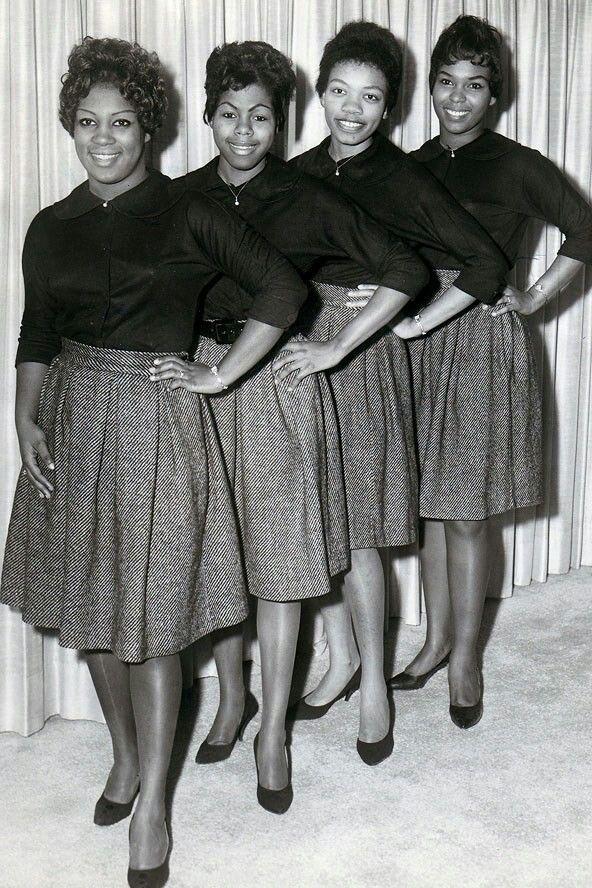
  In subsequent shows that I attended hosted by Murry the K, the roster of all-time greats among people of color was mesmerizing to behold: Chuck Berry, Fats Domino, Little Richard, Little Anthony, the Ronettes, the Shirelles (pictured). I had a front-row seat to the young Shirelles when in 1961 they sang the new, seminal rock ballad written especially for them by a teenage Carole King and her husband, Gerry Goffin, “Will You Love Me Tomorrow?” At the time, King and Goffin and their young child lived a few blocks from me in Sheepshead Bay.
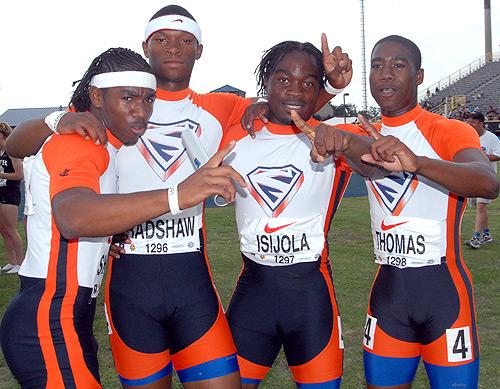
 Neighborhood shifts and changes in school admission policies led Sheepshead Bay High School to eventually have a predominantly black student body. Ironically enough, an all-black Sheepshead 4x100 relay foursome would win the 2008 Nike Outdoor Nationals title in Greensboro, N.C. The school, like so many in the city, has since been transformed into four smaller schools on the same site to try and enhance academic proficiency. It is now called The Frank J. Macchiarola Educational Complex (just as Julio’s Andrew Jackson High School would become Campus Magnet).