
Folders |
Luke Alverson's Brilliance Not Confined To RunningPublished by
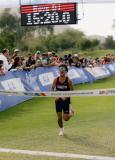
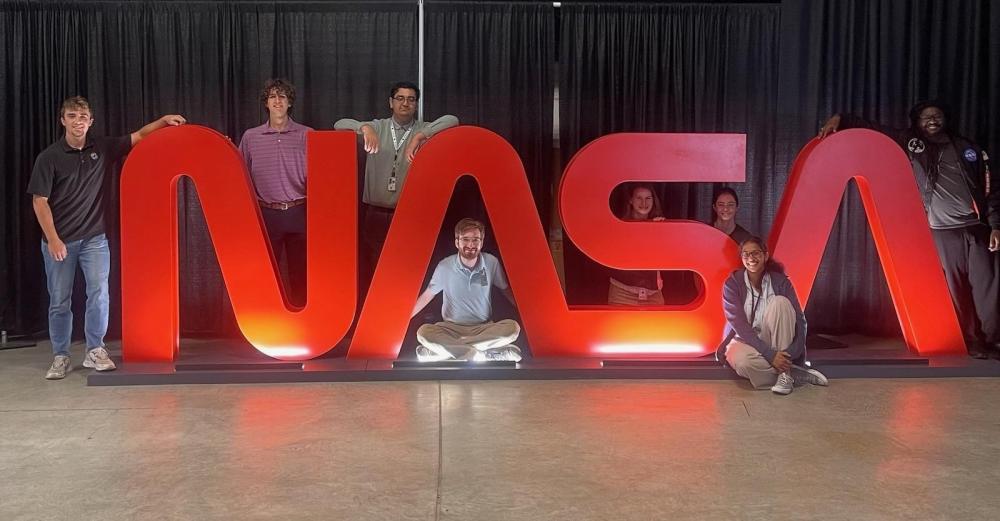
Alabama Standout Selected For NASA Internship Over The Summer, While Figuring Out All The Right Moves To Progress His Training By Oliver Hinson for DyeStat Photos courtesy Sally Alverson Sally Alverson knew her son, Luke, was smart long before she knew he was fast. When Luke was three years old, he told his mother that he didn’t want to eat butter anymore – a shocking revelation in an Alabama household. It wasn’t because he thought it was yucky, or because of any particular incident. He had heard that butter wasn’t healthy, and he wanted to be healthy above all else. On the other hand, it didn't take long for Luke to prove that he was fast, too; by the third grade, he was already outpacing his peers in his elementary school’s running club, and by the time he entered high school, he was the fastest runner on the James Clemens High (Madison, Ala.) cross country team. Fast forward three years and Alverson is one of the fastest runners in the country. On Sept. 14, Alverson posted a 14:49 5K to win the Southern Showcase, firmly putting himself in the national spotlight and earning a No. 19 ranking on the DyeStat national individual boys rankings. He’s run 4:11.70 for the mile and 8:54.45 for the 3,200, and he’s a favorite to win the Alabama state cross country championship this fall. And yet, his academic achievements are far more impressive. Over the summer, he became the first high school student to complete an internship at NASA's Marshall Space Flight Center, and with an ACT score of 35, he could likely attend any of the schools he’s being recruited by, regardless of his running prowess. In fact, it’s not a stretch to say that he wouldn’t be as good of a runner as he is today without his intellectual drive. Is he talented? Absolutely, but in order to get to his current level, he hasn’t been able to coast on that talent. He’s been forced to optimize every bit of his life and training. He is the essence of the phrase “student of the sport.” Alverson’s running career officially began in the fall of his seventh grade year. In Alabama, middle school students are allowed to represent their high schools in athletics, so Alverson was practicing with 18-year-olds when he entered middle school. He said his first practices were “a little intimidating.” “I really had no idea what I was doing,” Alverson said. “I tried to run with the top guys on my team for my first run, and I was dying because I was running as fast as I could to keep up with them on an easy day.” That fall and throughout middle school, he says, he was mostly running for fun. He showed some promise on the track, clocking a 4:51.25 in the 1,600 as an eighth grader, but he wasn’t all that curious about his training. That changed during his freshman year, in no small part due to his surroundings. Alverson’s team featured a lot of seniors that year, and their influence was crucial in making him curious about the sport. He remembers one senior in particular, Tyler Gohlich, who taught him a lot of the fundamentals he uses today. “He gave me the baseline understanding of how everything works,” Alverson said. “He would always try to critique my form a little bit because I used to stomp. (He taught me) stuff about warmups and how to treat different exercises. And, like, don’t go too fast on the warmups because the young kids always try to go a little fast.” Learning from Gohlich and putting in the work himself helped Alverson transform that fall. During a preseason time trial, he shocked himself by beating everyone else on the team, and that trend continued throughout the following months. By November, he was clearly the top dog, and he took 12th at the AHSAA State Cross Country Championships. That success changed the trajectory of his career, and it forced him to raise his expectations for himself. “It definitely felt really weird being the top guy as a freshman,” Alverson said. “I felt pressure because, like, I gotta keep this up. I gotta keep getting better.” Alverson’s parents were even more surprised, if not concerned, about his rapid growth. “We kept worrying,” Sally Alverson said, “because you see some kids that plateau. He started off his freshman year and started breaking school records. We would kind of try to warn him, ‘This might be it for you.’” But Alverson had other ideas. He kept training, not just harder, but smarter. One of the changes he credits his improvement to is getting more sleep. He started going to bed at 8 p.m. to get nine hours of sleep before his morning practices. “He does the little things better,” Drew Bell, Alverson’s coach, said. “I preach the little things, but he’s probably the athlete that’s taken me up the most on that.” As a result, he did anything but plateau. By his sophomore track season, he was running 4:17 in the mile and 9:22 in the 2 mile. After that, some of the same thoughts ran through his head: I might not get any better. Wrong again. In his junior cross country season, he made an even bigger jump, taking his 5k PR down from 15:47 to 15:13. At this point, running started to become even more serious for Alverson, as he started contacting college coaches and envisioning his career on the next level. As his prospects grew, so did his drive to optimize his training. During his junior track season, he started taking magnesium glycinate and melatonin to boost his sleep regimen, and he started diving into training research. Like most athletes, he looked around in running publications and followed elite athletes’ advice, but he also decided to go straight to the source, looking at articles in medical journals. This research led him to threshold training, which he wasn’t doing much of at the time. He decided to take things into his own hands, discussing his ideas with Bell and asking if they could implement more threshold workouts. Bell, a Pan American Masters champion in the 3,000-meter steeplechase, is an experienced and knowledgeable coach, but when Alverson approached him with training concerns, he was all ears. “I want kids to speak up,” Bell said, “if there’s something different or something better they want to try.” Alverson started incorporating threshold training heavily this summer, and it made him a more confident runner. “When I do a workout and I know what specifically I’m targeting,” Alverson said, “I feel like I can gain that confidence and improve in that aspect. Confidence is a huge part of running.” If he needed more concrete proof that his training was working, he had it after the Southern Showcase, when he ran 14:49 for a win against a stacked field that included UNC commit Tommy Latham and Notre Dame commit Riku Sugie. Alverson’s mother was even more surprised than him by his performance. “When he came around the last corner, we were not expecting it to be him,” Sally Alverson said. “In fact, I saw somebody come around the corner, but I wasn’t paying attention because I thought, ‘Oh, that’s not Luke.’ Then to realize that it was Luke was amazing. I think my husband and I started hugging and crying.” That race put Alverson front and center on the national stage, which he says has been a complex experience for him. On one hand, there has been some excitement – he says he’s seen his name floating around on LetsRun – but he doesn’t want that excitement to distract him. “It’s cool to be on the national stage, but if I could focus on myself and drown out the noise, I think that would make me better,” Alverson said. Alverson’s mother is not at all surprised by that sentiment; she says he’s never been one to brag or hog the spotlight. In fact, she says, when he was doing his NASA internship this summer, he never told his coworkers that he was a serious runner because he thought it would be seen as bragging. In that way and many others, she says, Luke is nothing like his peers. His constant drive to improve manifests itself in odd ways; for instance, when his friends were relaxing on the beach after the Alabama state track meet last spring, Luke was back in his hotel room studying for AP exams. Sometimes, his mother has to stress to him that academics and running aren’t the only things that matter in life. “I try to remind him that it’s okay to be a kid and have some fun,” she said. “It’s okay to stay up past eight, have a cookie, go to a football game.” Those personality quirks have seeped into his college search as well. He wants to pursue engineering in college, but many of the schools he initially talked to discouraged him from trying to major in engineering and run collegiately at the same time. His response? He crossed them off his list. “He’s more interested in the schools that support both,” Sally Alverson said. As of now, that list includes Duke, Michigan and UCLA, but he doesn’t have a timetable for his eventual decision. For now, he’s focused on making the most out of the rest of his high school career. In November, he wants to break Ethan Edgeworth’s Alabama XC 5k record of 14:34, win the state meet and place high at NXN. Next spring, he wants to break 8:40 in the 2-mile and break four minutes in the mile, which he calls “the ultimate barrier” for high school runners. Coming into high school, those goals would have seemed crazy to his coach, his parents, and to Luke himself, but being a hard worker and a student of the sport has allowed him to shock those around him at every turn. Now, it seems silly to put a limit on what he can do. His mother puts it best: “He keeps moving the goalposts.” More news |