
Folders |
In The Aftermath Of Washington State's Cuts, Athletes Seek Belonging And Stability ElsewherePublished by
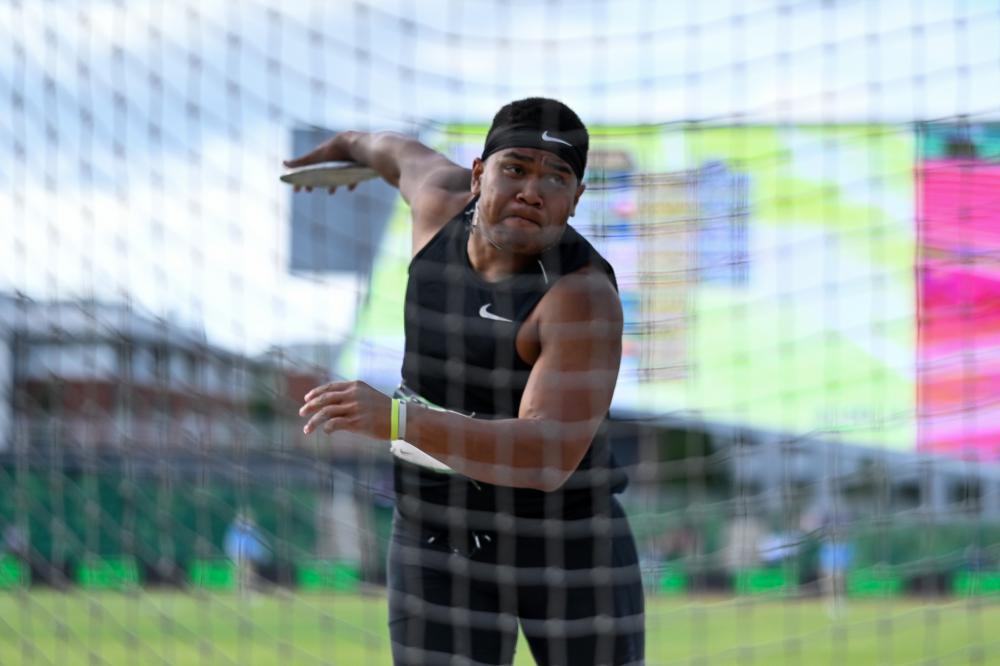
Former WSU Throwers Share Their Experiences Learning Their Program Had Been Cut To Weighing Options For The Future By Oliver Hinson of DyeStat Photo by Kim Spir Evan Berg didn’t want to go to the meeting. He and his father, Chris, were in the middle of a forest and working on a project for the Washington State Department of Natural Resources. Evan was working for extra money so he didn’t have to work at school, and his father was along to give him some company. Berg had just gotten his truck and towing equipment set up when he checked his phone. The deputy director of athletics at Washington State University, Brad Corbin, had sent him and his track and field teammates an email earlier in the day. It read: Good morning, I am reaching out to request your attendance at a mandatory track and field program meeting TODAY at 1:00 PM. This meeting will be held via Zoom. Berg didn’t care for the interruption. He barely had any cell service where he was and he considered skipping the meeting and asking one of his friends to fill him in. At the last minute, though, he got into his truck and drove to the top of a nearby hill to find a stable connection. Ten minutes later, he reappeared. He told his father, “I have to transfer schools.” Chris Berg laughed out loud. He thought his son was joking. “We’d just gotten his room and everything else taken care of down there at the school,” he said. “He’d already signed the lease and all that stuff.” It was no joke. Corbin had welcomed Berg and his teammates to the meeting and informed them that the Washington State track and field program was shifting to a “distance-based approach,” prioritizing distance runners above all others. Several sprinters and hurdlers would lose their roster spots. All of the field athletes lost theirs. Berg, a javelin thrower, wished he was joking. He had no intention of leaving Pullman, a place where he had started to find a home and wanted to continue. “Everything was set up,” he said, referring to the upcoming year. “But they just took everything away from us, like, immediately.” His father could hardly believe it. “No, they didn’t,” his instincts told him. “That’s the beginning of sports, I mean, that’s the whole… you know, that’s the Olympics.” Berg’s mother, Christie, had a similar reaction. She doesn’t recall exactly what she said at the time — save for one line. It’s still ringing in her head. Why would they do that? Berg and his fellow throwers could sense something was amiss. “We had suspicions,” he said. “We knew there were going to be some cuts.” _ _ _ Kai Twaddle-Dunham, a shot putter and discus thrower, also expected the program to face some minor cutbacks in the aftermath of the House vs. NCAA settlement as Washington State tried to cope with the financial implications of revenue sharing with an already shrinking athletics budget. Twaddle-Dunham thought the rosters would be trimmed, only leaving a few athletes in each discipline — still a dire situation, but one in which he, one of the top throwers on the squad, would likely keep his spot. “I thought I was safe,” he said. When the email from Corbin arrived, there was immediate concern. Messages swirled in the throwers’ group chat. Anybody know what today’s Zoom meeting is about? one teammate asked. How important is it? asked another. Berg, of course, almost didn’t go. He asked his teammates to mark his name down if attendance was collected. I’m thinning out a forest, he texted. But he got the news the same way 35 athletes — about half of the men's and women's roster — received it. In the immediate aftermath there was shock and disappointment. For some, it didn't make sense. The field program was successful at Washington State. Out of 26 athletes who qualified in individual events for the NCAA West Regionals in the outdoor season, 10 came from field events. Six more came from the sprints and hurdles. When Twaddle-Dunham first heard the news, his first thought was, Man, they really just cut a lot of the scorers we had. “I guess it didn’t really matter how good you were,” Twaddle-Dunham said. “They wanted to stick with distance.” The administration put out a press release to this effect on June 16 titled, “Washington State Track & Field Update.” It stated, among other things, that shifting to a distance-focused approach “gives the WSU Track & Field program the best opportunity to remain competitive at the conference and national levels in distance events in cross country, indoor track and field, and outdoor track and field.” Berg was insulted. “They’re just throwing it out like nothing, like we’re nothing,” he said. Three weeks later, WSU athletic director Anne McCoy finally spoke publicly. “I think the decision was made not for financial reasons as much as they were for competitive success and ability to really provide a high-level experience,” McCoy said, according to the Seattle Times. The school also eliminated three coaching positions, which saves an estimated $300,000. “At the end of the day, many resources will still be put into the cross country and track program," McCoy said. That's little consolation for those who funneled into the transfer portal. “It’s disgusting… I mean, it’s all about money,” Berg said. Washington State may be merely the first school to make significant cuts to track and field. Ever since the initial approval of the House vs. NCAA settlement last fall, worry has spread throughout the world of collegiate sports. The settlement, which was granted final approval by Judge Claudia Wilken in early June and went into effect on July 1, is multi-faceted. First, it allows universities to pay college athletes directly, up to a cap of $20.5 million per school per year (that figure is expected to rise 4% every year until 2034-35). Second, it provides approximately $2.8 billion in back payments to college athletes who competed between the years of 2016-2024 and missed out on name, image and likeness (NIL) opportunities. Third, it establishes roster limits instead of scholarship limits, the latter of which has traditionally governed collegiate sports. Power 5 schools (including the former schools of the Pac-12, of which Washington State is a member) and any other Division 1 school that opts into the settlement must abide by these limits. For cross country, it’s 17 athletes per gender. For track and field, it’s 45. Those are the upper limits, though. Any school that wishes to implement smaller limits is free to do so, and many schools are expected to as they face the strain of the back payments. Part of the $2.8 billion figure established by the settlement will be paid by the NCAA, but the rest will be paid by member schools. The vast majority of Division 1 athletic departments are not profitable to begin with; with more payments to make, not to mention the new demands of revenue sharing, they are likely to find themselves in crisis mode. In business terms, this means cutting expenditures and focusing on established revenue streams. In sports terms, it means football and men’s basketball remain top priorities and everyone else hangs in the balance. At most schools, about 90 percent of revenue sharing funds are expected to go towards football and men's basketball. For Washington State, one of two Pac-12 schools left behind during the last round of conference realignment, the ground has been shifting for two years. - - - Berg committed to Washington State as a walk-on. The decision made sense. He was a homegrown prospect, a state champion in the javelin in his senior year at Mead High in Spokane. Competing for the Cougars was a dream. “We were extremely proud,” Christie Berg, Evan’s mother, said. “You know, we’re big WSU fans… it’s a big deal, a Division 1 school.” When he committed, the coaches told him they didn’t have any money for him that year. If he threw 64 meters (209-11), though, they would give him money next year. Berg threw 64.93 meters (213-0) in April — at a home meet, no less — and by his calculations, he should have been approaching a 50 percent scholarship. Every time he talked to head coach Wayne Phipps, though, Berg said Phipps was shaky on the details. On some occasions, he would tell Berg that there would be money coming his way, but he never followed through on those promises. “He acted like a politician every time he talked to you,” Berg said. “There was, like, a debate every single time.” Throughout the year, Berg and his teammates heard plenty of times that the team had “no money.” Eventually, Berg realized that not only would he not be getting a scholarship, the program was likely going to shrink in some way. He just couldn’t picture that it would be this way. Twaddle-Dunham also saw some trends he didn’t like throughout the year. “All season,” he said, “I feel like he leaned, across the board, towards the cross country kids. It felt like special treatment, almost.” In addition to being the head coach and director of the track and field program, Phipps is also the director of the cross country program and head coach of the men’s cross country team. He did not respond to an interview request. In terms of legacy, Washington State has chosen to protect a program that nurtured Gerry Lindgren in the 1960s and Henry Rono in the 1970s. However, at the 2024 Olympic Games, four WSU alumni competed in track and field, all in sprints, hurdles and jumps. - - - At the time of the fateful Zoom call, WSU's students were already a few weeks out of school. They were registering for classes, signing leases, and otherwise preparing for another year in Pullman. They didn’t get to sit and consider the ramifications of a changing collegiate sports landscape combined with an environment that prioritized distance runners who compete for three seasons instead of two. One of the most harmful aspects of the program’s cuts, according to those affected, was the timing. By waiting until June to make the announcement, athletes were forced to scramble in order to find new homes. Berg and teammate Mason Andulajevic, who throws the weight and hammer, signed a lease for an apartment just a few weeks before the announcement. Despite repeated explanations and pleas to the management company and several calls to lawyers, no one has budged. Berg and Andulajevic can’t find anyone to take over the lease, and they can’t get out of it. “The manager of the place won’t talk to anybody,” Chris Berg says. “You’ll get a voicemail, but they don’t return calls. Every once in a while they’ll text and say, ‘You still owe X number of dollars.’” Returning to Pullman was an option. The university is honoring the scholarships of any field athlete wishing to stay — but that promise only goes so far. Few of them were earning substantial scholarship money to begin with, and for many, the opportunity to play the sport they loved was the driving factor that led them to Washington State. Berg eventually decided to commit to Idaho, making the same switch as his former throws coach at Washington State, Julie Taylor, and joining a few of his teammates. It was a relatively easy choice. He’ll be around many of the same people he trained with in Pullman, and the campus is in Moscow, Idaho, is less than 10 miles from Pullman. If he's forced to the keep his lease, Berg could still make that work with a short commute. Idaho is also an intriguing pick because of its financial situation. The Vandals, who compete in the Big Sky Conference, chose not to opt into the House settlement, so they won’t have to deal with the headaches of revenue sharing. Because of this, Berg believes that his program will almost certainly be safe. “I’m feeling pretty good about my decisions,” Berg said. “I’m confident that everything is going to work out.” Andulajevic is also considering Idaho, but unsure whether it makes sense academically. He's a sports management major, and Idaho doesn’t offer anything comparable. Now, he has to look at his transfer credits and see where those will put him, and he also has to figure out what to do about his half of the lease if he doesn’t end up going to Idaho. It’s a stressful situation — so much so that he’s struggling to make himself confront it. “I feel like I keep putting it off,” Andulajevic says. “It’s kind of overwhelming. And so I really have to give myself a timeline of when I need to make decisions by.” Twaddle-Dunham, meanwhile, has had the easiest road. With season’s bests of 16.95 meters (55-7.50) in the shot put and 57.09 meters (187-3) in the discus, he had plenty of coaches contacting him. He recently committed to Auburn. For him, the most difficult part of the process was the logistics of visiting and communicating with all the schools that wanted to talk. The night before his official visit to Auburn, he had just returned home a visit to Wyoming at about 10 p.m. He had to get to the airport at 5:30 the next morning, and he flew from Boise to Dallas to Atlanta. By the time he got to campus, he was “dead tired” — he had tried to sleep on the plane but wasn’t able to. All things considered, though, Twaddle-Dunham had fortunate circumstances. “I got lucky,” he said. Auburn gave him a full ride. The Tigers are also putting themselves in a better position to protect themselves from financial strain. Their track and field roster for the 2024/25 season only lists 32 men, well under the 45-man limit set by the House settlement and even dipping below the 35-man limit that the SEC proposed last year. With less athletes, the program costs less money and is less vulnerable. If Twaddle-Dunham can keep his form, he feels it’s unlikely that he’ll lose his spot at Auburn. Strikingly, all three of these athletes possess optimism about their situations. Even Andulajevic, who is still up in the air, has mostly moved on from the grief. “I’ve accepted it at this point,” he says. “I’m looking forward to what’s going to come next.” Even if every Cougar finds a new home by fall and it appears that nothing happened at all, there is a part of their lives that can’t be erased. On May 16, Andulajevic made a post on Instagram titled, “Year One.” It contained a few dozen pictures of him and his teammates from the 2024-25 season — some in competition, but many behind the scenes. Two months later, the post conjures a different emotion. “It’s sad,” he says. “Obviously, there’s tons of memories I had at Washington State… it’s just kind of sad to look back on it knowing that I’m not going to be going back there.” Berg and Twaddle-Dunham echo these sentiments. Some of the fondest memories from Twaddle-Dunham’s first year involve sitting in his dorm room with the freshman throwers, enjoying each other’s company. “I was like, ‘this is going to be my little group,’” he says. “‘I’m going to be with them for the next four years, and hopefully later in life, I can still be in contact with them.’” Twaddle-Dunham knows now that this is unlikely. He’s prepared for the inevitability to drift apart from former teammates. “If you’re not with them in person or see them on the daily, it tends to happen,” he said. Even that is not the worst part, though. The worst part is the anxiety. For Berg and Andulajevic, it’s certainly there. They don’t know if or when their situations will be resolved, and even if they are, they’ll always live with the knowledge that something like this can happen to them again. Even Twaddle-Dunham has anxiety. Yes, he’s going to an SEC school, and yes, he’s poised to become one of the best throwers in the conference over the next few years. But no level of assurance can erase what he already knows. “I’m definitely gonna feel more pressure,” he says. “Even if you’re the best, they can leave at any moment.” More news |