
Folders |
The Legend of Maud: Chris McKenzie And The Birth of Women's Track and Field - Part 3 - By Marc BloomPublished by
Chris McKenzie Boldly Challenges the AAU, Which Grants the 440 and 880 in 1958, Starting Women on a Path to Gender Equity
McKenzie and Her Peers Take The Cause to the Track and Roads and World-Class Women Confront Issues About Feminity and Their Bodies Last of Three Parts By Marc Bloom for DyeStat (Parts One and Two Summary: Chris overcomes the deprivations of World War II in London, as well as a leg disease, takes up running and competes on a world record relay, moves to the U.S., marries American star Gordon McKenzie and finds bracing restrictions in women’s competition that propel her to fight the formidable forces of the AAU.)
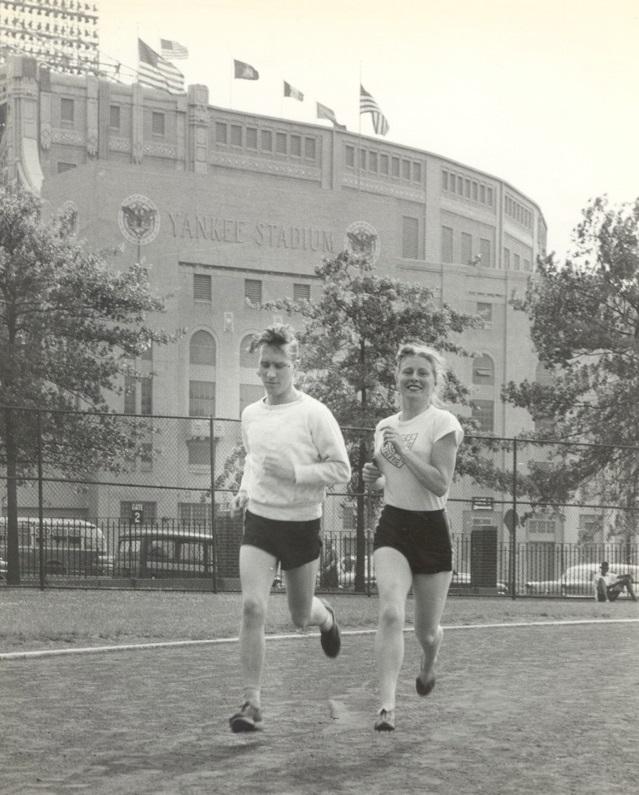
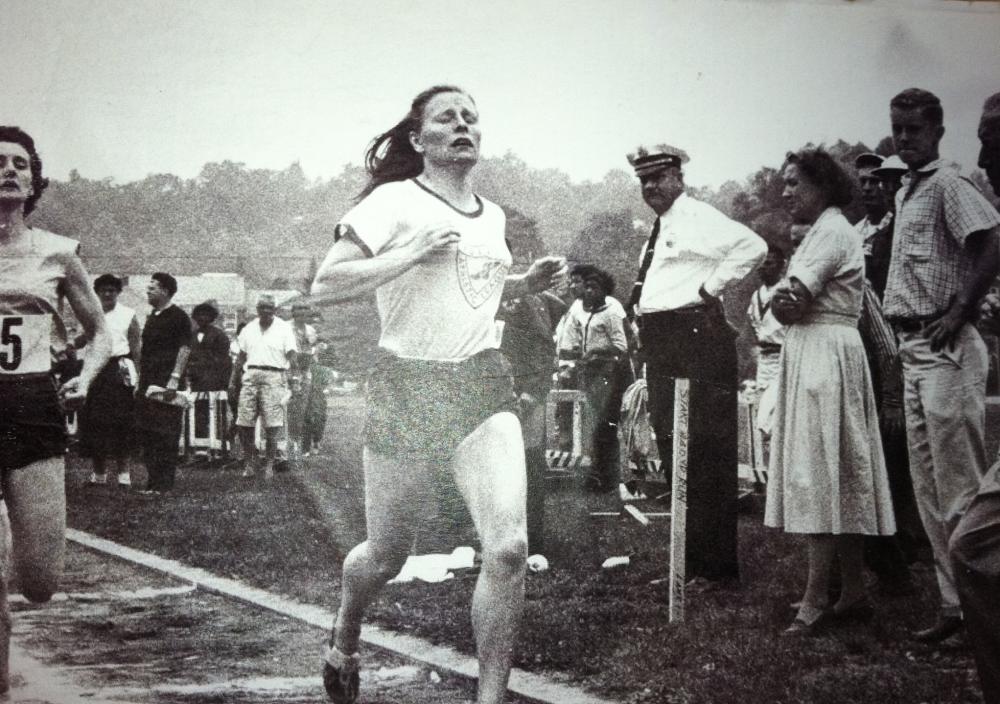
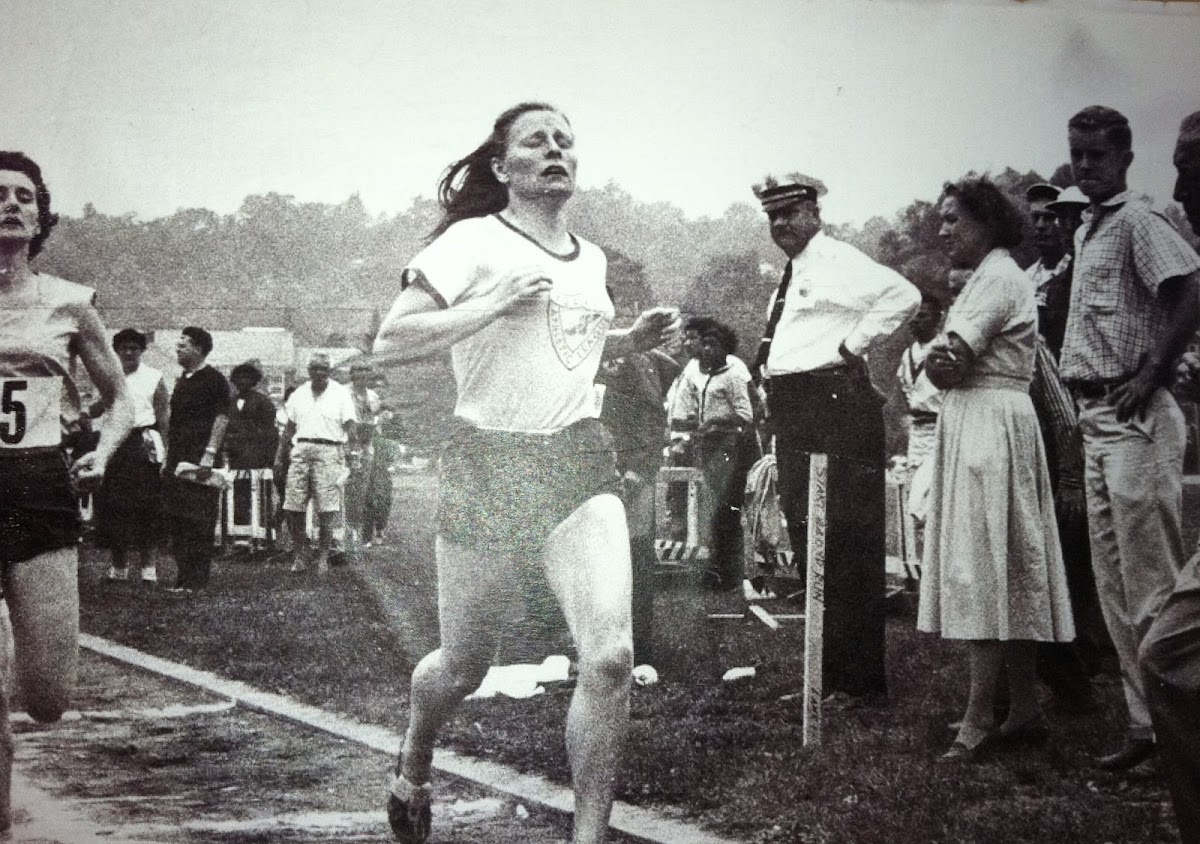
With her sprinter’s disposition, Chris’ connection with the 1952 Helsinki Olympian Delores Dwyer was a natural. By the mid-1950s, they were both New Yorkers, living a subway ride apart. “We went to each other’s homes,” said Chris. Their fast friendship was based on mutual respect and intolerance for petty authority. Dwyer was only 17 when she competed at Helsinki but she was not the youngest member of the young, 10-person women’s track and field squad. The U.S. had a 15-year-old girl in the javelin. Dwyer ran the 200 and did not make it out of the heats. The previous year, Dwyer was a Pan American gold medalist in the 4 x 100 relay and in 1953 she was AAU champion in the 200. When Chris and Delores hatched their scheme in 1956, Dwyer’s best running days were behind her. She was a student at Queens College and later to become an actress, appearing in off-Broadway productions. The runners’ plot came with it some clear-eyed thought and a certain intellectual rigor. They were aware of the day and time when the AAU had scheduled a closed-door meeting in downtown Manhattan, at the Woolworth Building, a neo-Gothic New York landmark situated across from City Hall. Ironically, the building was later owned by the parent company of Foot Locker, whose high school cross-country championship starting in 1979—for boys and girls—was an important application of the federal Title IX legislation that had become law a few years before. The Foot Locker cross-country staff operated in that very building. On the day of the AAU assembly, Chris and Delores (who appeared in a 2003 episode of “Sex and the City” and died at 76 in 2011) met in midtown near the Queensboro Bridge. Chris was attired in a slim racing outfit with outer sweat jacket. Delores had her bicycle. They made their way together, Chris running and Delores bicycling, going the 6 miles through traffic to the Woolworth Building. Once inside Woolworth, Chris and Delores barged into the meeting. The AAU brass sat up front at the dais. The bigwigs included Dan Ferris, the secretary-treasurer who pretty much ran the organization, and the women’s committee head, Frances Kaszubski, a 1948 Olympian in the discus and former basketball star. Chris asked to speak. Kaszubski refused. “This is a closed meeting,” she said. Chris grabbed the microphone and shouted, “I want to know if I can run the quarter-mile and half-mile.” Kaszubski shouted back, “I will never let any girl of mine run longer than 220 yards!” Then Kaszubski, reciting the litany of reasons typically used to hold women back, asserted, “I don’t want women getting muscular, and I don’t want women unable to have children because that’s going to happen…” Kaszubski, according to Chris, concluded her tirade with a threat. “If I see you cross the finish line in any race further than 220 yards, I will DQ you for life.” Others on the dais, including Ferris, nodded in agreement. Ferris, who would hold his AAU position for more than 30 years, was a zealous defender of amateurism who’d been involved in a number of athlete suspensions going back to Jim Thorpe. Chris was aghast. “Running meant so much to me. Every time I ran I thought of Anne,” she said, referring to Anne Stone, the British runner who’d treated her childhood leg ailment, was her first coach and died of cancer in her early 40s. “I couldn’t believe what I was hearing.” Affronted with this spectacle, as the stunned room of officials waited for the next grenade to be tossed, Delores whispered to Chris, “This is ridiculous. You’ve got to do something.” It was time for Chris’ last resort: her body. She told the assemblage. “‘You can’t tell me what I can or cannot do.” Then, to the gasps of the crowd, she removed her jacket and stood there in high-cut shorts and the Jog Bra of its day, revealing her midriff. “Do you think I’m too muscular?” she asked in a fiery challenge. “Do I look fat to you? I weigh one-hundred pounds!” Kaszubski didn’t give an inch. According to Chris, she retorted, “I will still DQ you in whatever race you run. And you’ll be banned for life.” Chris and Delores stormed out. Ferris, apparently, was moved just a tad. Maybe it had something to do with his plans to finally retire from the AAU; perhaps Ferris wanted to do something for the common good before hanging up his rulebook. He agreed to let Chris run 440s in 1956 and ’57 men’s meets at Macombs Dam Park as long as she “raced” alone, with no other women. It was a crumb but it was something. Chris proceeded to run a number of solo 440s as time trials in around 60 seconds. Thinking of the next step, she said to Gordon, “Make sure we get Dan to write this down.” Well, something must have been written down because in an historic decision women were finally given the 440 and 880 at the 1958 AAU women’s outdoor nationals, held in Morristown, New Jersey. First, the events were staged as “exhibitions” at the ’58 indoor nationals in Akron, Ohio. Living in Ohio, Grace Butcher, a pioneer in her own right, came to Akron, ran the 880 and won in 2:48.6. She told me that as the field positioned for the race, Kaszubski, who was from Cleveland, interrupted the starter, “stood us up and gave us a talk about looking good, trying to smile as we ran and above all not collapsing.” In Morristown, Chris won the 440 in 61.6 while placing third in the 880. But in the 880, apparently the women didn’t smile enough to suit Kaszubski, who disqualified the winner, Lillian Greene of New York, claiming she was paced by her PAL teammates running on the infield during the race. When I asked Lillian, now 75, about that day, she said that other competitors—not teammates but those from a Chicago club with similar uniforms—were “whooping and hollering” as they witnessed something new: women running the 880. Everyone marveled at Greene, only 17 and a sprinter, who knew little about the half-mile but still set an American record of 2:26.4.
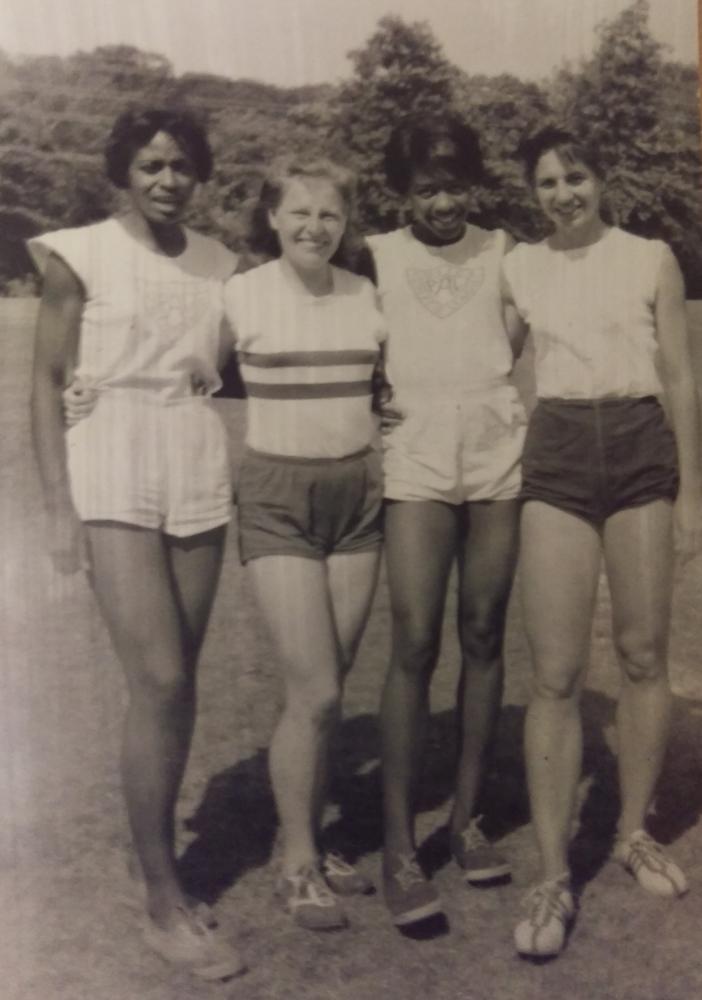
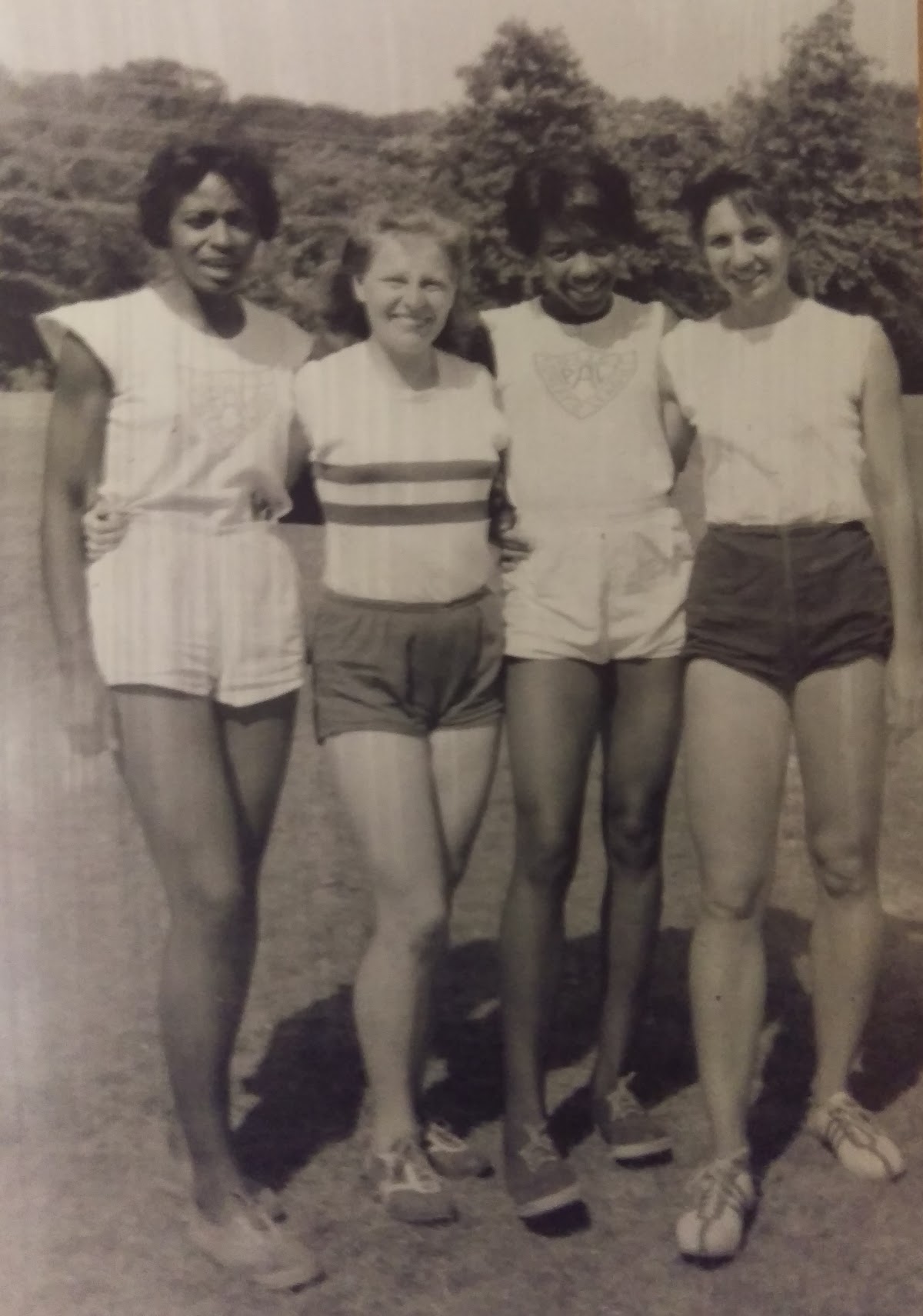
But before Greene could be declared the official winner, there had to be tears, threats, acrimony. Chris, a PAL teammate of Lillian’s, tried to console her as the young girl wept in confusion. Even the sanctimonious Dan Ferris disagreed with Kaszubski’s call. Finally, at the meet, the decision was reversed. Greene was the winner and as an AAU champion on her way to Europe with the American team, men and women, to compete in dual meets against the Soviet Union, Poland, Hungary and Greece. (Chris would have also been on the team but was not yet a U.S. citizen.) Ten years older than the teenage Greene and vastly more experienced, Chris counseled her on running the 800 and what to expect overseas. “Chris was my best friend,” said Greene. “I knew not to be afraid.” Greene considered herself, Chris and Louise Mead, all with the PAL, “the three musketeers.” She recalled with pride, “We were the first integrated track team.” An African-American who grew up in Harlem, Greene was a cultured young woman who attended Hunter College and spoke other languages including enough Russian to help her teammates in Moscow. In Europe, she would face older and stronger opponents with a history of 800 running that had not ceased after the 1928 Amsterdam debacle. Indeed, pressure for longer U.S. women’s running events had come from the Soviet Union, as the U.S.-USSR Cold War dual meet series was set to begin. In addition, Olympic authorities were planning to restore the women’s 800 in the 1960 Games at Rome. That summer of ‘58, the training advice Greene received from U.S. women’s team coach Ed Temple, a sprint specialist, was to “go run with them white boys.” So Greene ran through Gorky Park in Moscow with future distance greats Bill Dellinger and Jim Grelle of Oregon, a shocking mixed-race sight in Moscow. On the four-meet tour, while placing behind her opposition, Greene lowered the U.S. 800 record to 2:18.6. She also set a U.S. 400 mark, 58.4, with a victory in Budapest. “I thought I had died and gone to Heaven,” Lillian told Louise later on. Greene returned home to less freedom than she’d had behind the Iron Curtain. At the 1959 Pan American Games in Chicago, there was no women’s 800 and the 400 was an exhibition race, which Greene won. Because Greene was not competing in an official event, U.S. officials denied her a hotel room and she secretly bunked with Wilma Rudolph, on the verge of superstardom, and other women from the ground-breaking Tennessee State Tiger Belles. One step back, one step ahead. That same year, in another first, U.S. women could run the 440 and 880 at the indoor nationals in Washington, D.C. Around the same time in Washington, in the shadows of the Eisenhower White House, Chris, pregnant with her first child, ran a 10-mile road race while protesting with a t-shirt inscribed with this slogan: “If I Can Carry a Baby For 9 Months, I Can Run 9 Miles.” After Butcher and Greene placed 1-2 in the 1959 outdoor nationals 800, and then 3-4 in the U.S.-Soviet dual meet, held at Franklin Field in Philadelphia, Butcher complained to Track & Field News publisher Bert Nelson that his magazine did not carry the women’s results of the most significant American meet of the year. According to Mead’s book, Nelson responded in part, “I can’t get very excited about girlish athletics. Whatever the reasons, I seem to feel about the same as 99 percent of the track fans I know.” In 1960, an Olympic year, both Chris (who received her American citizenship that spring) and Gordon attempted to make the U.S. team. Chris encouraged Gordon to move up in distance to the marathon. You’d never know it from Gordon’s front-running style, but according to daughter Tina, born the year before, her father would sometimes give up on a workout. Chris had the solution. When Gordon went out for a long run, she’d lock the door of their Bronx apartment, check her watch, and not let him back in until he’d completed the agreed-upon distance.
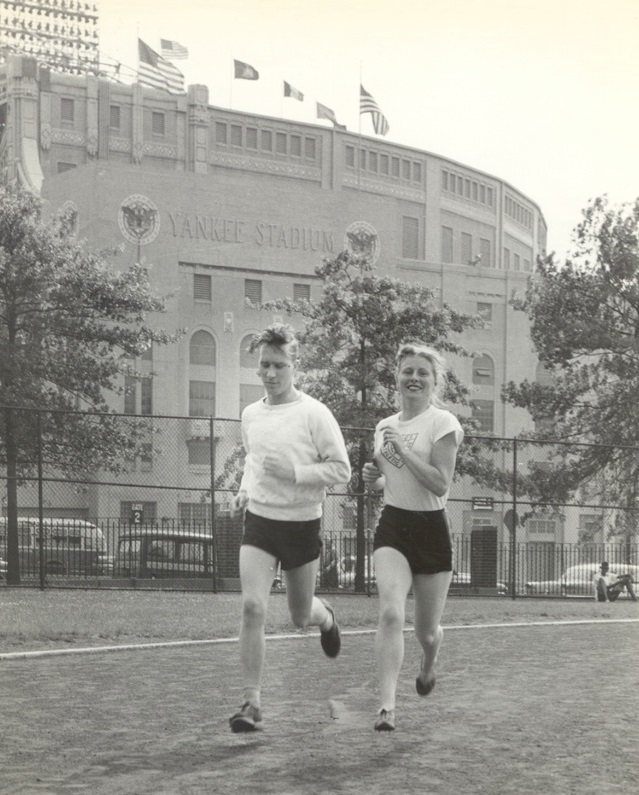
The U.S. used the Boston Marathon and Yonkers Marathon, the AAU National Championship, five weeks apart, to select the marathon runners for Rome. At Boston, Gordon shot out ahead to lead the field. When Chris, on the sidelines, saw Gordon she feared his pace was too fast. Chris handed infant Tina to a friend, removed her street shoes and in her nylon-stockinged feet chased after her husband at several points in the race, shouting, “Slow down, slow down…” The male press had a field day with the episode. They called Chris “shapely” and “feminine” with “her hair streaming in the wind.” The Associated Press quoted Chris saying she’d tried to run her husband’s pace, “just like we do in training twice every day.” Eventually Chris got to the finish by car, motor scooter and subway, to see Gordon take second behind Paavo Kotila of Finland in 2:22:18. With his placing as first American, and his subsequent second in a Yonkers duel with victorious John J. Kelley, Gordon secured a spot on the team for Rome. While Chris was rated an Olympic team contender herself, in the women’s trials in July in Abilene, Texas, she fell in the 800 in a collision with Mead and finished far back. ”I never cried so much in my life,” she said. Race winner Billie Pat Daniels, 17, set an American record of 2:15.6, and went on to Rome. Years later, as Pat Connelly, she gained fame coaching Olympic sprint champion Evelyn Ashford. Chris went to Rome anyway, to accompany Gordon, who wound up 48th in the marathon in what he called his worst race. He attributed the setback to over-training. Maybe Chris should have kept the Bronx apartment door unlocked. With her dual citizenship, Chris competed that summer for Britain in a small club meet against Italy outside Rome. She insists she won the 880 in 2:07, a time that would have placed her sixth in the Games. When the results made the Italian newspapers the next day, Chris says, she was contacted by an American official and told to keep her time quiet so as not to embarrass the U.S. team and its much slower Olympic 800 entrant. In the early ‘60s, Chris’ outspoken push for women’s rights spread. In 1961, Smith College student Julia Chase, who’d run the 1960 Olympic Trials 800, made headlines by running a 6.5-mile race in Massachusetts and showing up on Thanksgiving Day to run the Manchester 4.75-miler in Connecticut. A high school dancer, Dianne LeChausse joined her, and Chris turned up unannounced to make it a trio. (With her entry as “Chris,” race personnel assumed she was “Christopher.”) Officials tried to talk the women out of it, and the usual AAU threats of lifetime bans were tossed in. The ingenious AAU came up with another tack: the women’s presence would cause the entire men’s field to be disqualified—what later became known as the “contamination” rule. Despite race monitors trying to physically push them aside, the three women ran, starting a block behind the men. “You have to remember that Rosa Parks and the civil rights movement was the environment we were coming from,” Julia, now 74, told me. Julia ran all the way, finishing ahead of several men. Diane, wearing a gym suit with bloomers, came in last in the field of 138. Chris was ahead of Julia, but fearing the ban—at that point for Gordon, who could also end up on an AAU enemies’ list—stepped aside at the tape without crossing the line. The event, in today’s vernacular, went viral. “People in Finland asked me to outline my foot and send it to them,” said Chase. The AAU, starting to realize that while winning a few battles it was losing the war, came to Julia’s coach, George Terry, with a bargain. If Julia promised not to run Manchester and other road races with men, the AAU would rescind her ban and, in addition, sanction 1.5-mile cross-country events for women starting in 1962. Chase agreed. Another bold action undermining AAU intransigence came from two of the three musketeers, Lillian and Louise, now New York City junior high school teachers. They joined to take their female students to run the cross-country course at Van Cortlandt Park in the Bronx. The Board of Education threatened to fire them. They did it anyway. More threats came. More girls ran. With it all, Frances Kaszubski demonstrated little change of heart. At the 1962 women’s indoor nationals in Louisville, she pulled Chase, 19, aside in the grandstand, pointed to Grace Butcher, the world indoor record holder in the 880, racing below on the track, and said to her, “See Grace down there. She used to be so pretty before she tried to run distance. Don’t do it.” Grace, by then dabbling in mile training, crashed a secretive AAU meeting in Cleveland run by Kaszubski to ask for the mile and cross-country—“all the things the European girls did.” She told me Kaszubski’s response was, “You’ve got the 440 and 880, now shut up.” That same year, Chris and Gordon left the Bronx for a four-bedroom Cape Cod in Great Neck, a New York City suburb on Long Island. Chris longed for the pastoral setting of her native England and she got it with the lush grounds of the U.S. Merchant Marine Academy nearby. There were wooded loops for training and a home that would be filled to the brim with trophies, running photos and memorabilia—including an embossed IAAF award for the 1953 world record relay and the original spikes from that race encased museum-like in protective glass. Also, in 1962, the advent of the 880 enabled the emergence of Doris Severtson from Washington state, who took fourth at outdoor nationals and years later, as Doris Brown, would collect five straight world cross-country titles and a fifth-place in the 1968 Olympic 800 final (won by American Madeline Manning in 2:00.9). Even by then, while running to school as a teacher, Brown was ridiculed by staff and not allowed to enter the building in running attire. While the efforts of Chris and others were paying off, female runners still seemed caught in the cross-hairs of identity politics and challenged by many of the same women’s liberation issues swirling throughout the nation. Another young 800 talent, Francie Kraker of Michigan, said she had many run-ins with Kaszubski, whose stale attitudes influenced the chaperones assigned to guard women on national teams. In one mid-‘60s international meet in the U.S., Francie, a teenager with long, blond hair, was ordered to cover her head with a bandanna in order to march in the Opening Ceremonies. “They harassed me about my hair,” she said. “Why? I looked too feminine.” The “feminine mystique” plagued American women runners every step of the way. A 2015 article of considerable scholarship by Julia Chase in Marathon & Beyond—drawing on research by Stephanie Daniels and Anita Tedder for their 2000 book, “A Proper Spectacle”—asserted that the 1928 Amsterdam 800 dispute was a hoax fabricated by the media to placate the likes of Avery Brundage, who was becoming the powerful AAU boss and wanted nothing of female athletes. Of the 800, Chase told me, “The women finished the race, shook hands and went for dinner.” She said that the post-race photos showing carnage as damning evidence were actually cut-and-paste composites of women from various events in a state of distress. In truth, nothing happened in the 800. Daniels and Tedder got hold of a race video to prove it. Kaszubski, who died in 2010 at 93, and had been married with one son, apparently succumbed to the myth. Still, Kaszubski, a 6’2” all-American center in women’s amateur basketball before getting into track and field, was perhaps burdened by the same regressive gender mindset she sought to enforce. Kaszubski tried to upgrade women’s track brand by adding entries and spectators to the national meets while drawing other girls’ athletic groups and educational committees into the growing female sports tent. To her credit, after the 1948 London Olympics, where she competed in the discus, Kaszubski drafted a 10-page letter—a manifesto—detailing the poor treatment of female athletes at the Games and submitted it to the U.S. Olympic Committee. “The Kaszubski Complaint,” as it was called last year in an insightful analysis by Cat Ariail on the Sports in American History website, was quoted as saying “the living conditions were ghastly,” and that female track and field athletes suffered deprivations affecting their performances as compared with the men being quite comfortable, thank you. Kaszubski concluded by requesting a “New Deal” for women. As Ariail, a doctoral candidate at the University of Miami, noted, there were actually two Kaszubskis—the “mad woman,” as Lillian Greene called her, holding traditional female roles dear, and the risk-taking fighter for gender equity. Perhaps, taking the long view, the enigmatic Kaszubski that Chris McKenzie confronted in 1956, found herself too often alone with her conflicts and insecurities and, in the cultural milieu of the times, fearful of what progress and change truly meant. The pioneers who challenged her seemed better equipped to accept their new and evolving roles. Grace Butcher became a poet, author, teacher, actor, motorcycle rider and horse trainer in her neck of rural Ohio. At 83, she still runs, performs and hauls manure. Francie Kraker, who became Kraker Goodridge, made two Olympic teams and went on to college coaching. Doris Brown, also a two-time Olympian, added six world records to her resume. As Brown Heritage, she too went on to college coaching—more than 30 years at Seattle Pacific—while holding USA, USOC and IAAF posts that helped advance women’s progress in the 5,000, 10,000 and marathon. Julia Chase received a medical degree and became Dr. Julia Chase Brand, a recently retired psychiatrist living in Connecticut. Lillian Greene finished her schooling at Colorado State. She integrated the Rams’ track team, washed dishes until receiving an academic scholarship, spread the gospel on women’s running and learned to ski. As Greene-Chamberlain, Ph.D, she became an internationally renowned sports educator who’s kept her hand in track and field as the announcer at the Colgate Women’s Games. And what of Maud Christina Slemon McKenzie? She still ran for Annie. She still kicked up some dust. She still loved running. Her friends remained grateful. “My father always told me,” said Lillian, “Never be afraid to be a pioneer. The spirit of the pioneer is free. When you’re the first person, as Chris was, you can never make a mistake. When she opened her jacket that day in New York, she opened the world. Chris was the mother of us all.” #
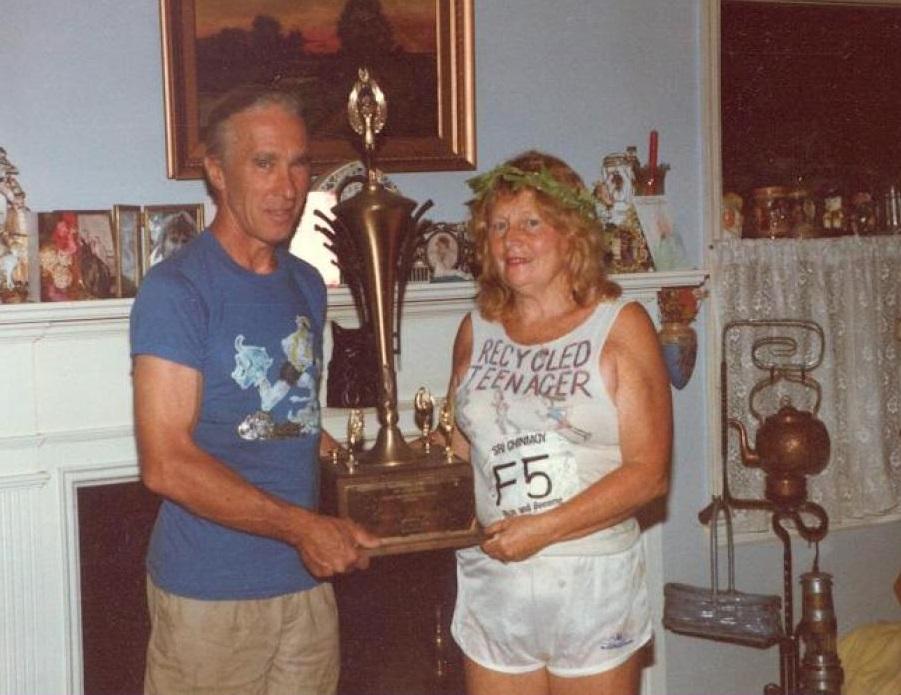
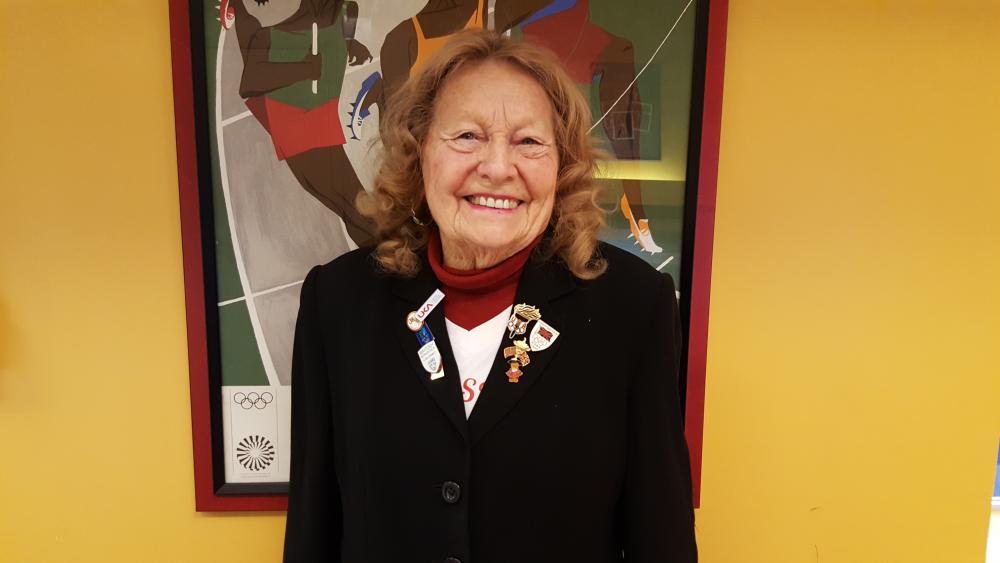
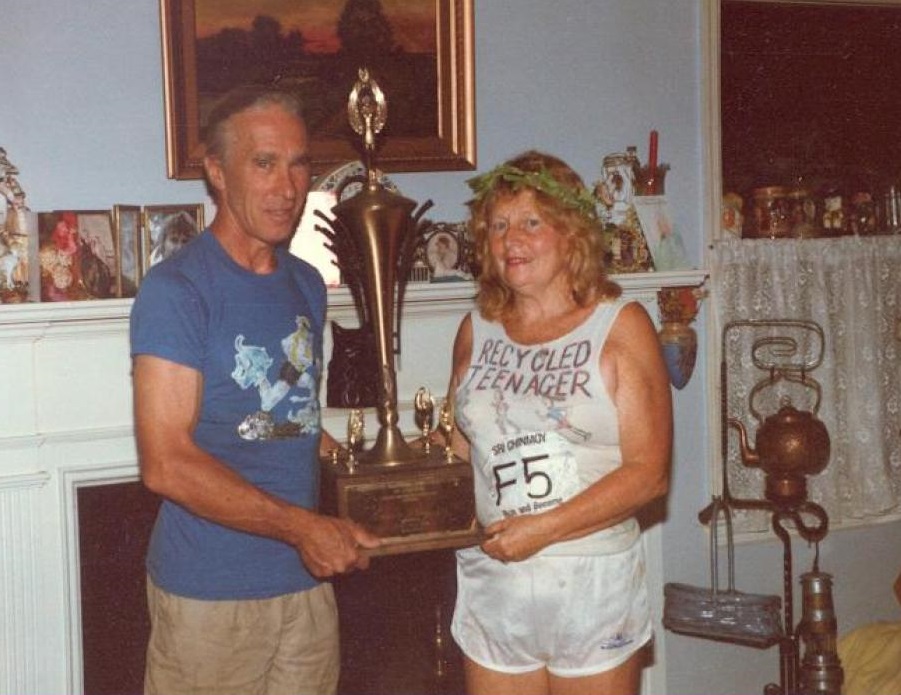
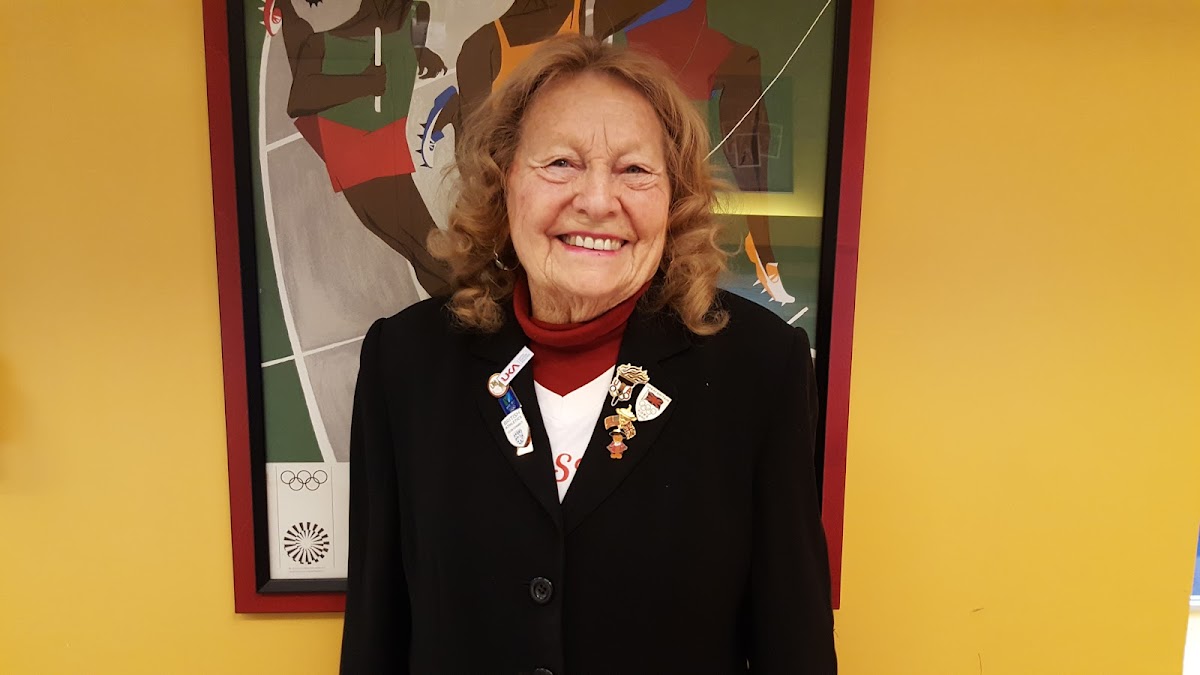
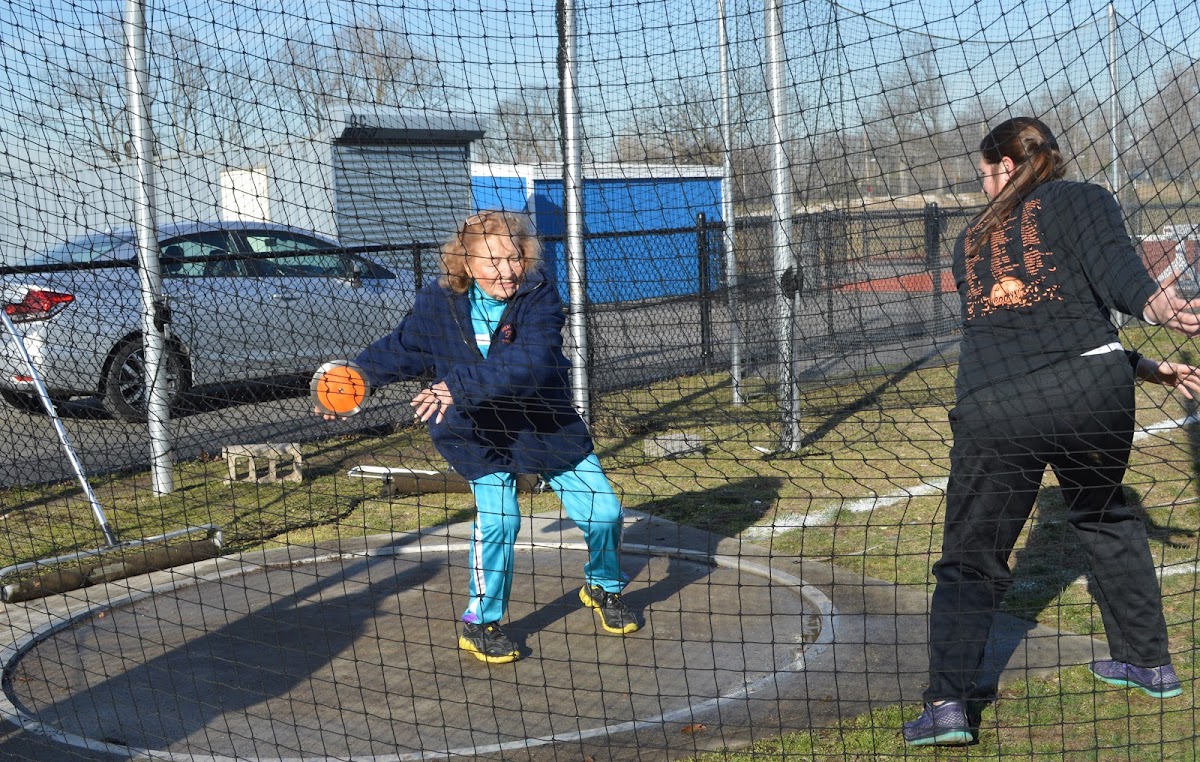
Postscript: ‘Recycled Teenager’ Gordon made up for his poor showing in the 1960 Olympic marathon with a fourth at Boston in 1961 and a silver-medal run at the 1963 Pan Am Games in Sao Paulo. Both he and Chris retired from world-class competition in 1964. They would have three children and seven grandchildren. In her 40s and 50s, Chris won many national masters’ titles while setting numerous age records. Often she wore a t-shirt with the inscription: “Recycled Teenager.” In 1980, she won five events at the Pan Am masters championships in Puerto Rico—a gold medal for each of the daughters in her family, she said. Gordon continued running, walking and doing other sports like handball. While in seeming good health and fully active, he died suddenly in 2013 at 86 after a family trip. Gordon and Chris had been married for 58 years. Chris still lives in their Great Neck home surrounded vy Gordon’s trophies and photos from around the world. Every night at bedtime, Chris kisses her sacred “runner necklace” made for her by Gordon after they ran a race together in the ‘80s. Early on, Chris had become a coach for the PAL and was recently honored by the organization for her longstanding contributions. In one of her finest moments, Chris coached PAL kids in the long jump by laying her 80-plus year old body on the take-off board and fearlessly instructing the youngsters to leap over her. Chris continued running into her late 70s, competed in masters’ shot put and discus and, at 85, coaches those events with her son, Adam’s, high school boys team—Great Neck North. At a recent team practice, Chris demonstrated technique in the shot and discus rings with the same athletic purity that marked her running career. She’s big on feet. Watching the team warm up, Chris called repeatedly, “Pick up your feet. Listen to your feet.” Adam said, “The guys love her. I joke around with the half-milers, ‘My mother can run faster than you.’ I have a sign posted, ‘Can you run faster than coach McKenzie’s mom?’”
|


 |
Beer
Great series about a great family
|
|---|